Shortest
Two-hour group walk
Gates of Peace to the Dome
- Length2 hrs start to finish
- GuideEnglish, Urdu, Hindi
- StopsCenotaph, Flame, Dome
- Pricefrom $20
Guides
Language
Currency
See open seatsstarting at $126 · free to cancelPin it on the map
39 places to find
Choose a trail, then press a marker or a place name for a short note and a Google Maps link.
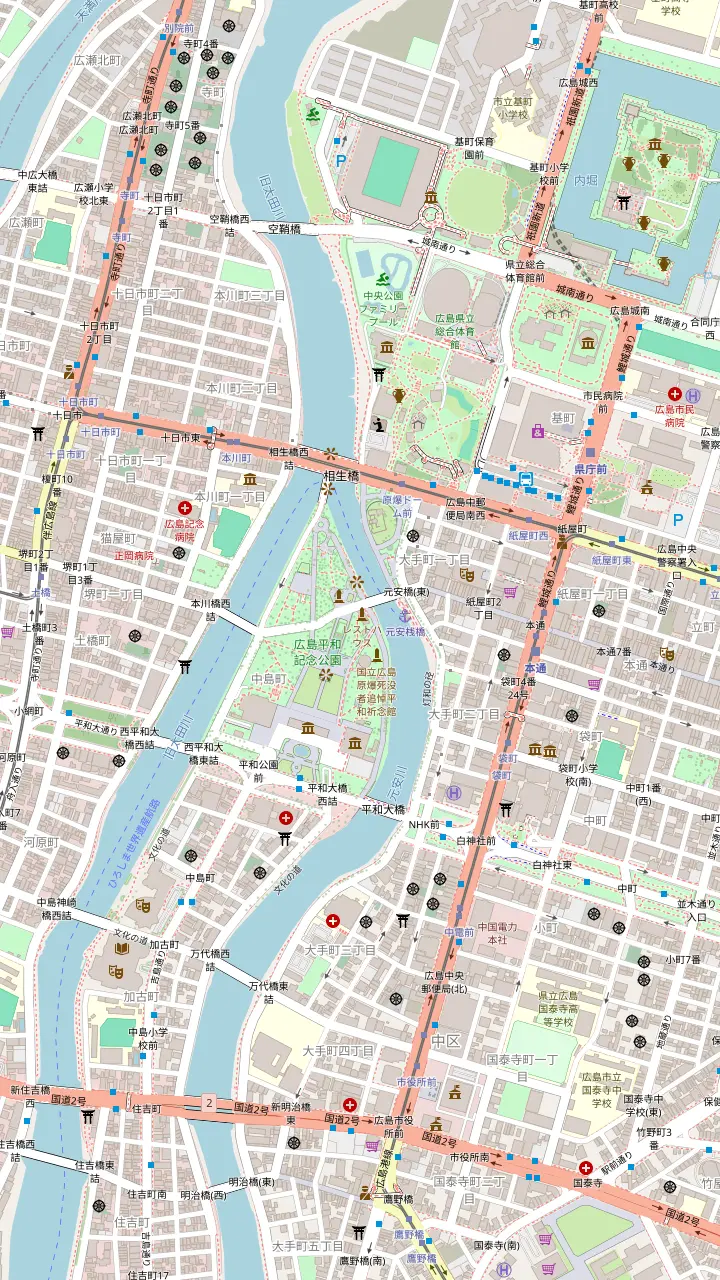
From JR Hiroshima Station it is a 1-minute walk from this streetcar stop.
Google MapsAdded to the UNESCO World Heritage List in December 1996.
Google MapsThe park includes the hypocenter marker at the former Shima Hospital.
Google MapsThe bell is embossed with a map of the world without borders.
Google MapsSadako Sasaki's classmates raised the funds to build it.
Google MapsIt stands 170 m from the hypocenter and reopened in July 2020.
Google MapsThe Hiroshima National Peace Memorial Hall for the Atomic Bomb Victims is part of the park.
Google MapsIt has burned since 1 August 1964.
Google MapsThe Cenotaph was built in 1952.
Google MapsThe museum's East and Main Buildings stand at the south edge of the park.
Google MapsOne of the monuments listed on the foundation's guided map of the park.
Google MapsAlso listed among the park's monuments.
Google Maps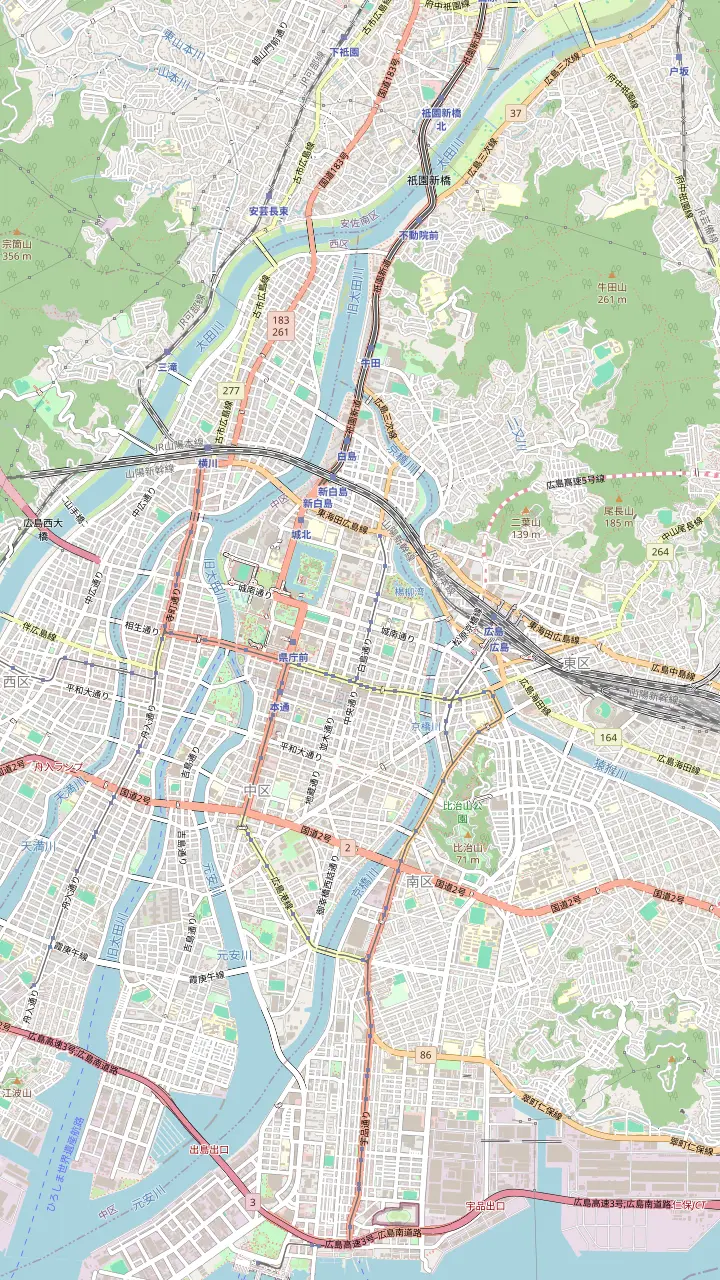
Hiroden streetcar No. 2 or 6 runs from the station to the Dome stop in 17 minutes in total.
Google MapsDesigned by Jan Letzl and built in 1915 as the Hiroshima Prefectural Industrial Promotion Hall.
Google MapsThe park covers 122,100 square metres.
Google MapsBuilt in 1589 by Mori Terumoto; the Ninomaru has free admission.
Google MapsAdmission is 350 yen for adults.
Google MapsThe museum attracts more than 1.7 million visitors a year.
Google Maps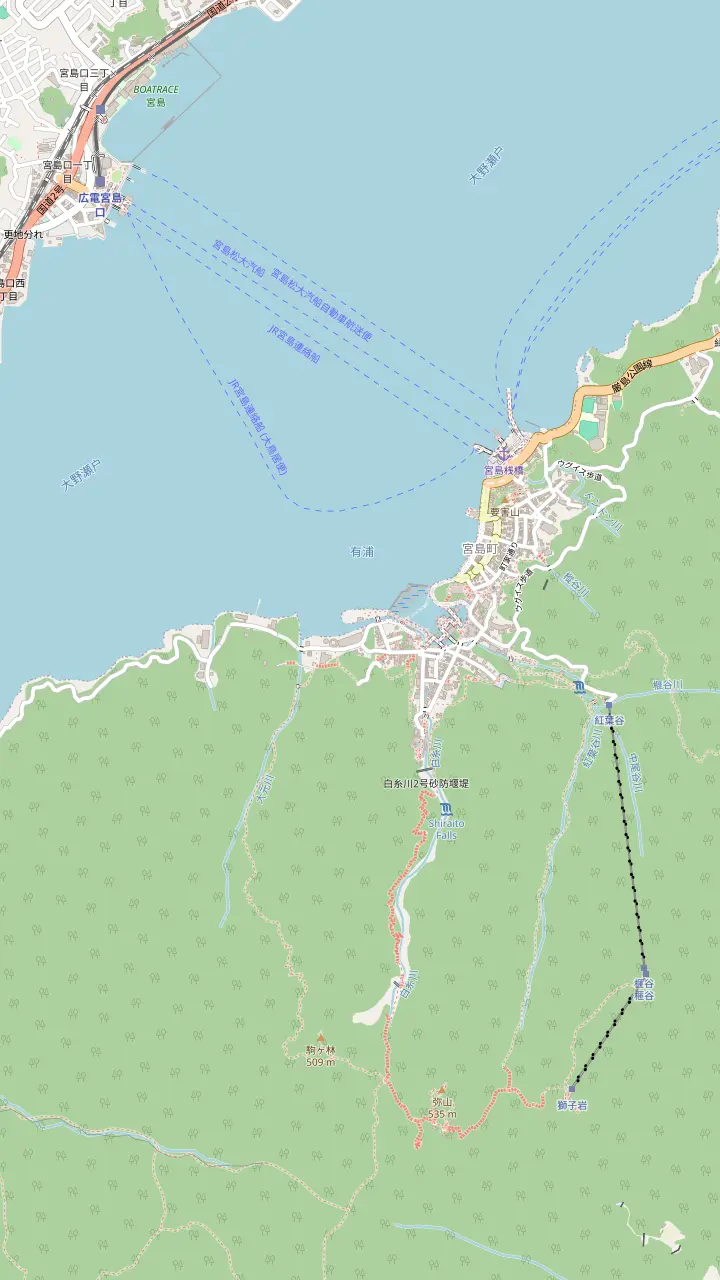
Two ferry companies sail from here to Miyajima.
Google MapsFrom the pier it is about a 10-minute walk to the shrine.
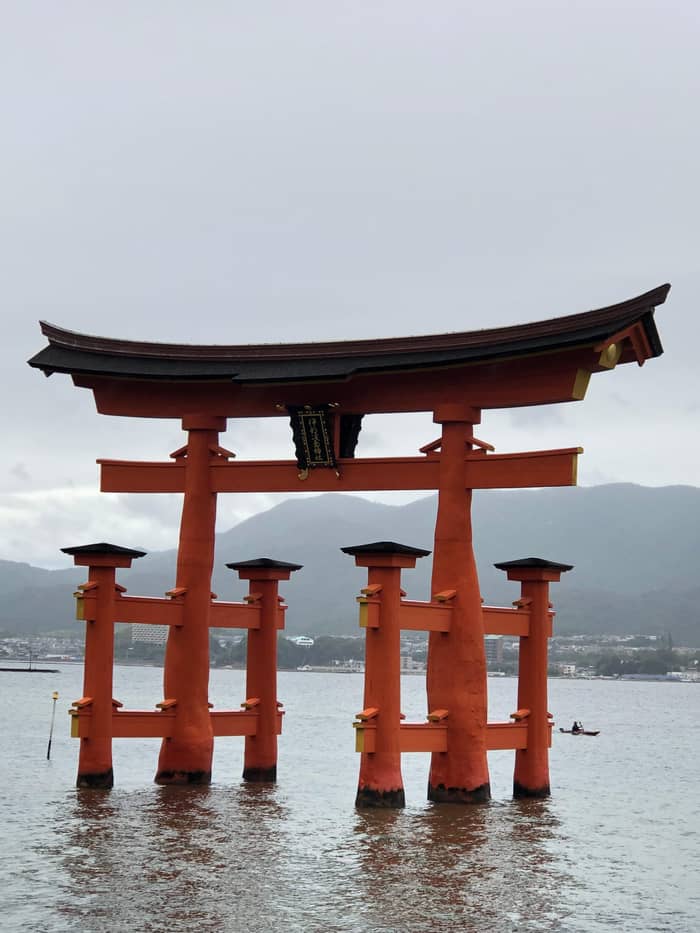
Google MapsThe shrine's O-Torii is built about 200 m offshore.
Google MapsThe oldest temple on Miyajima.
Google MapsA free shuttle bus runs to the station about every 20 minutes.
Google MapsFrom here the summit of Mt. Misen is about 30 minutes on foot.
Google MapsMt. Misen stands 535 m high.
Google Maps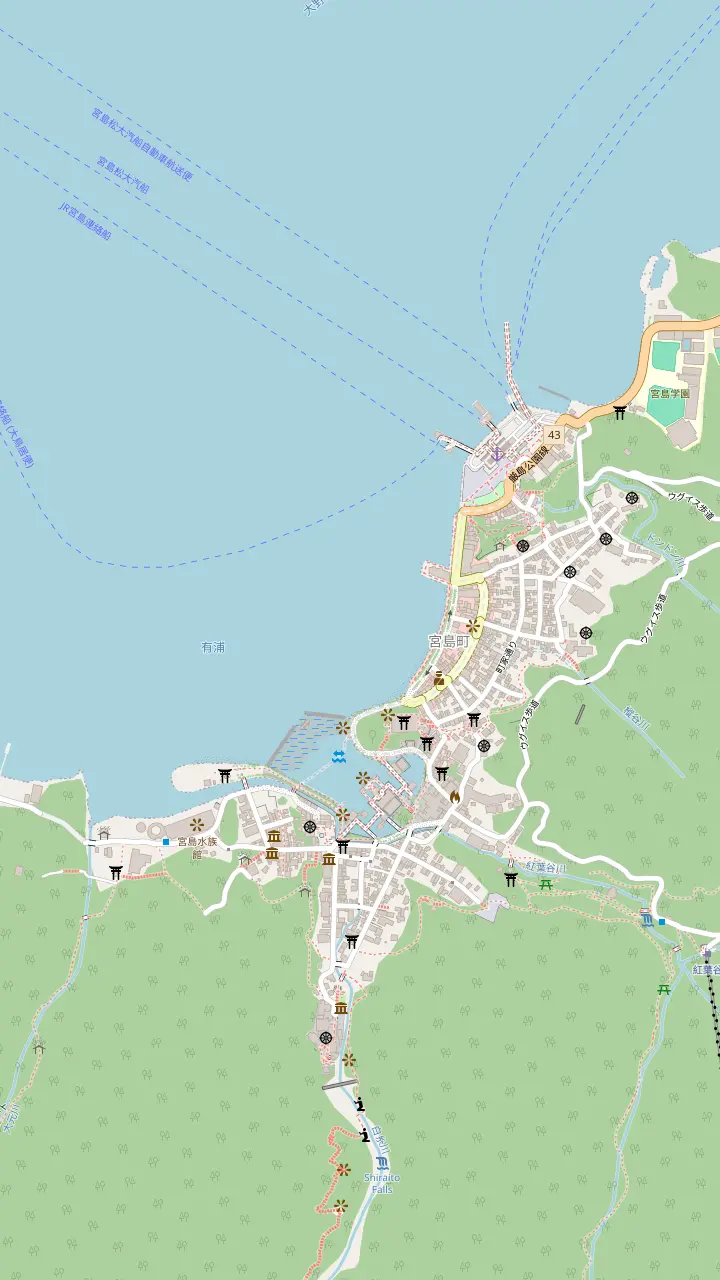
About 2,000 people live on Miyajima, plus free-roaming deer.
Google MapsMomiji manju is the most popular sweet on Miyajima.
Google MapsBuilt in 1407 and restored in 1533.
Google MapsOpen 8:30 a.m. to 4:30 p.m. throughout the year.
Google MapsAdult admission is 300 yen.
Google MapsThe gate stands about 16.8 m high.
Google MapsDedicated to Benzaiten, goddess of music, art and water.
Google MapsThe Kiyomori Festival is held around 20 March.
Google Maps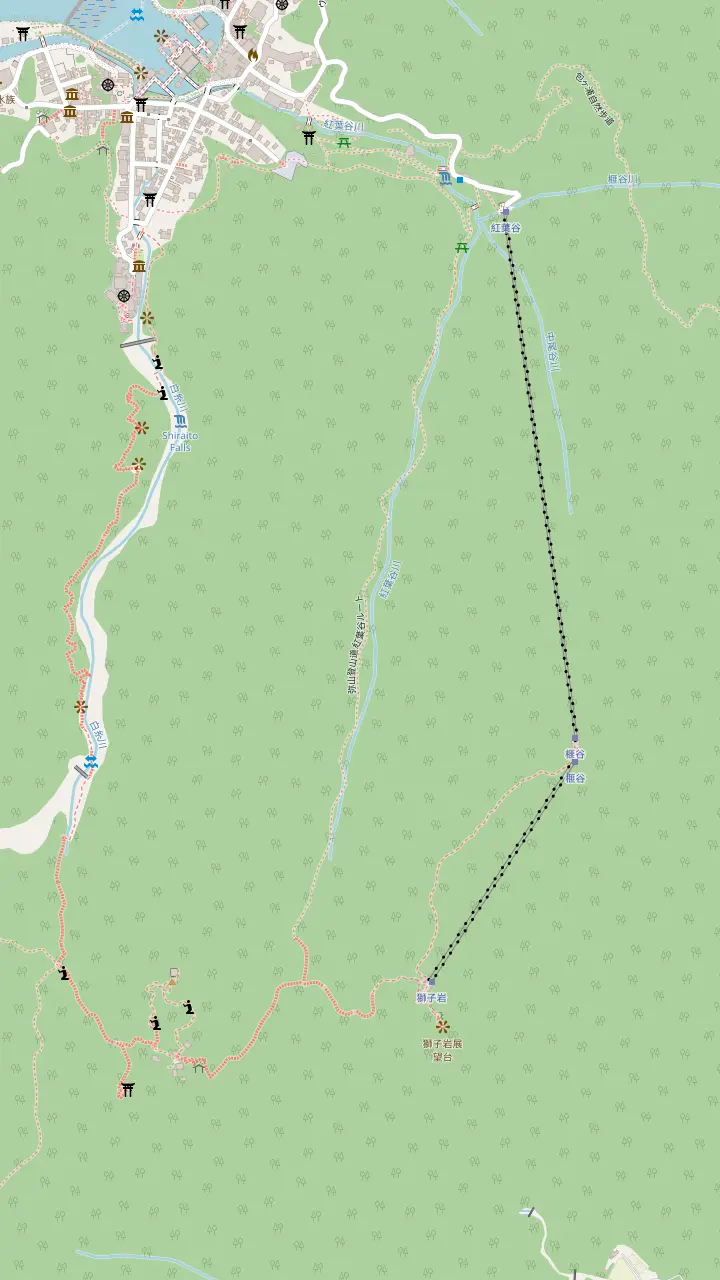
The Daishoin route climbs about 2.6 km to the peak.
Google MapsUp service runs 9.00 am to 4.00 pm.
Google MapsThe Momijidani Line and the Shishiiwa Line meet in series.
Google MapsCashless payment is not accepted at this summit station.
Google MapsThe sacred fire here has burned for over 1,200 years.
Google MapsThe Daisho-in course ends in a 360-degree view of the Seto Inland Sea.
Google MapsMap tiles © OpenStreetMap contributors
A park of memorials on a strip of land between two rivers, with the Dome at its head. Here is what each monument is, how the park is laid out, what happens on August 6, and how to reach it and walk it.
Editorial team, hiroshimatour.top · Updated November 2, 2026 · Roughly 9 minutes to read
Hiroshima in brief
The history of Hiroshima Peace Memorial Park starts with the land under it, and the park keeps that history in view. The area was previously an urban district called Nakajima, a thriving commercial center in the Edo era where goods coming up the rivers on boats were unloaded, sold or sent on by land.7 About 6,500 people are estimated to have lived in the seven neighborhood units of Nakajima when the atomic bomb exploded over the area.8 Before the bombing it was the central commercial district of Hiroshima.9
After the war the city did not rebuild it. On August 6, 1949, the Hiroshima Peace Memorial City Construction Law decided that the entire Nakajima district would be devoted to peace memorial facilities, and that was the beginning of what is now the Peace Memorial Park.10 JNTO adds that the recovering city decided the area should become a place of remembrance and contemplation, rather than simply being rebuilt.11 The park was completed on April 1, 1954.12
Today the park lies mostly on a narrow stretch of land between two rivers, extending south from the Atomic Bomb Dome, and JNTO calls it a green island in the middle of the city.11 It covers about 122,100 square meters.1 Walk it from the Dome toward the museum, and the layout reads as a deliberate line rather than a set of separate sights. Give yourself time to stop, since the monuments are placed for reflection and not for a quick circuit.
What is what
| Monument | Its role | Fact to remember |
|---|---|---|
| Atomic Bomb Dome | The preserved frame | Built 1915, World Heritage December 1996 |
| Cenotaph | Arched memorial with the names | Built in 1952 |
| Flame of Peace | A flame on the same axis | Burning since August 1, 1964 |
| Peace Bell | A bell rung in memory | Embossed with a map without borders |
| Children's Monument | Statue for the children | Built with funds raised by classmates |
| Rest House | Information and a pause | 170 m from the hypocenter, reopened July 2020 |
From JNTO and the Hiroshima Peace Culture Foundation.2,3,15,16,24,25,26
Kenzo Tange, then a professor at Tokyo University, and three others designed the park; their proposal was selected through a design competition that drew 145 proposals.17 At the south edge of the park stands a line of three buildings: the East Building and the Main Building of the Peace Memorial Museum, and the International Conference Center Hiroshima.18 Tange also designed the museum, which tells the history of Hiroshima before and after the bombing through pictures, movies and displays.19
The park was planned around one line of sight. The view from the pillars of the museum through the Cenotaph to the Dome is called the North-South Line, and the City of Hiroshima has fostered that view as a landscape that symbolizes Peace City Hiroshima.20 Its stated aim is that no buildings or structures are visible behind the Atomic Bomb Dome, which it calls the Ideal View.21 A Landscape Plan with height restrictions took effect on January 4, 2022.22
For a visitor this means one practical thing: the best way to understand the layout is to stand at the museum's pillars, look north, and let the Cenotaph frame the Dome. Do it early or late, when there are fewer people in the line of sight, and then walk the line in the other direction. The city describes the park as a place to console the souls of the victims, to pray for the abolition of nuclear weapons and for lasting world peace, and a place for people to gather and relax.23
Pace of a guided walk
Stop lengths as listed by one 2-to-3-hour small group walk; other tours time the stops differently.
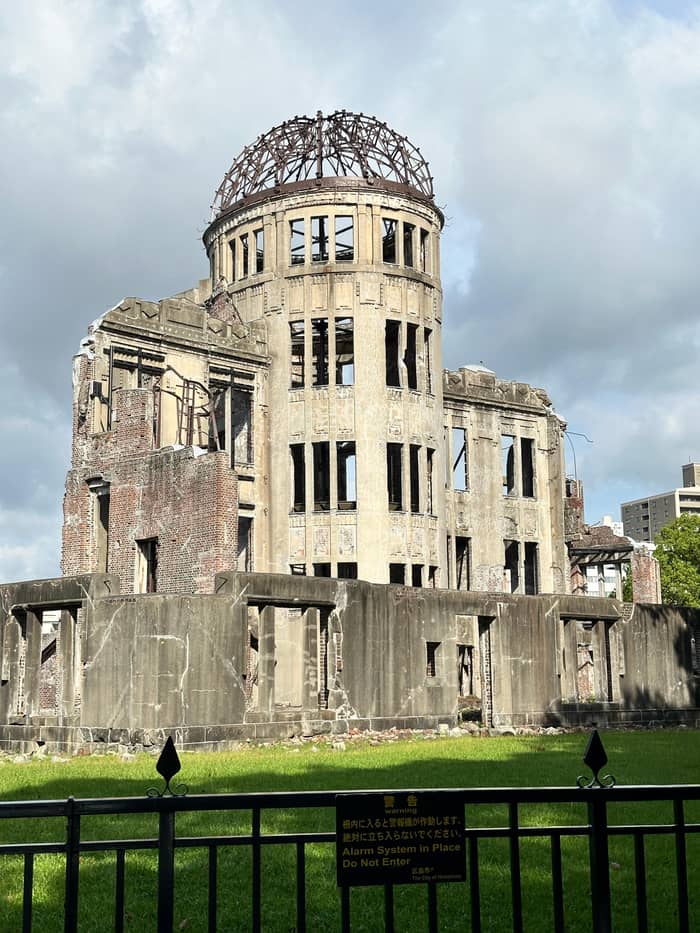
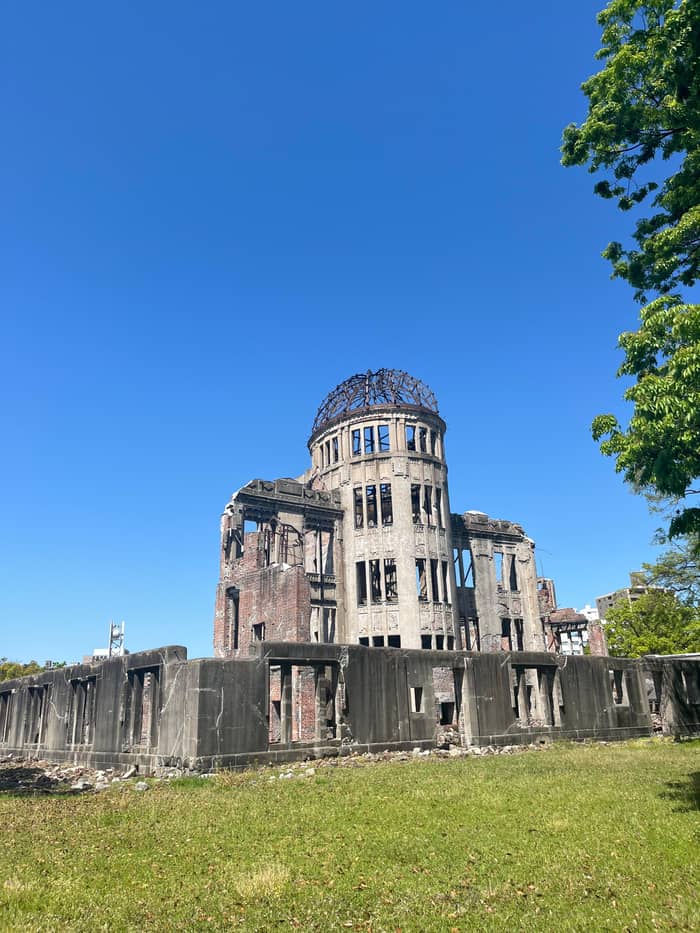
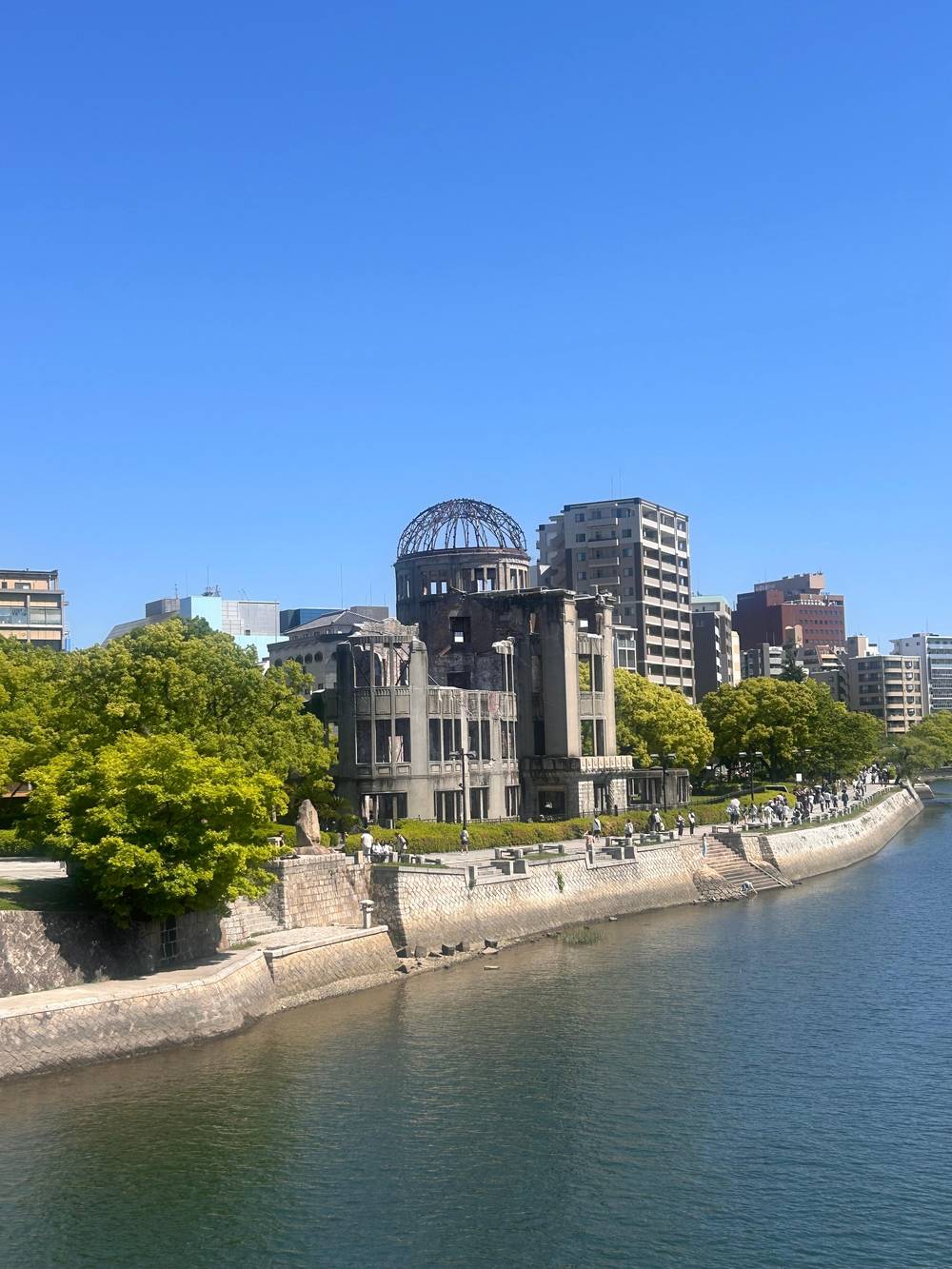
The Atomic Bomb Dome in Hiroshima Peace Memorial Park was formerly the Hiroshima Prefectural Industrial Promotion Hall, designed by the Czech architect Jan Letzl and completed in 1915.2 At 8:15 a.m. on August 6, 1945, the building was destroyed by the world's first atomic bomb dropping.13 It stood almost directly below the hypocenter of the blast.29 Because the pressure of the blast came from above, part of the wall escaped collapse, and though much of the exterior was stripped away, the skeletal frame survived.30,14
It was included in UNESCO's World Heritage List in December 1996 as a symbol of the devastation caused by the first atomic bomb.3 JNTO calls the Peace Memorial a symbol representing the cost of war and the importance of peace.31 It is the first thing you see on entering the park across the Motoyasu River.32 The city keeps the view clear on purpose, which makes the spot across the river the place to stand and look.21
The Dome stop of the streetcar is named for it. From JR Hiroshima Station take Hiroden streetcar No. 2 or 6, get off at Genbaku Dome-mae, and walk 1 minute; the total travel time is 17 minutes.4 On the bus tour on this site the Dome is the first planned stop and gets 15 minutes before the park's 35 minutes and the museum's 60. If you have the choice, come back once after your museum visit rather than only before it.
How to see the park
How much of the day the park gets decides the way to see it.
If I have just under two hours
The group walk
A 2-hour walk lists the Cenotaph, Flame of Peace and Dome.
If I want the history of the war told
The 2.5-hour walk
It runs from Gokoku Shrine and finishes at the museum.
If I am also seeing Miyajima
The Viator bus day
The tour gives the park 35 minutes and then crosses to the island.
If I will visit on August 6
Go by streetcar
If I travel on my own
Start at the Dome stop
Genbaku Dome-mae is a 1-minute walk from the Dome.4
Three routes through the park
Shortest
Gates of Peace to the Dome
Most reviewed walk
From Gokoku Shrine
Whole day out
Park, museum and the island
The Cenotaph in Hiroshima Peace Memorial Park, for the Atomic Bomb Victims, is officially the Memorial Monument for Hiroshima, City of Peace, and the list of the names of the dead is inscribed there.62 It was built in 1952 and inspired by an ancient clay haniwa figurine.15 Its form is an arched, gable roof meant to protect the souls of the victims from the rain and dew.63 The ceremony on August 6 is held in front of it.6
The Flame of Peace has burned continually since August 1, 1964, and is meant to burn until the day when all nuclear weapons have disappeared from the earth.16 The sacred fire on Mt. Misen, which has burned for over 1,200 years, was used to light it, which links the park to the island across the bay.60 The Peace Bell is embossed with a map of the world without borders, symbolizing One World.24
The Children's Peace Monument remembers the children who died, including Sadako Sasaki, and Sadako's classmates raised the funds to build it.25 Elsewhere in the park the foundation's guided map names the Gates of Peace, the Fountain of Prayer, the Monument in Memory of the Korean Victims of the A-bomb and the phoenix trees exposed to the bomb.40,39,64,65 Stop at these smaller ones as well as at the largest.
Hiroshima group price
Set the number of guests and compare the guided options.
4 choices in one view
Set the number of guests and compare the guided options.
≈
View≈
View≈
View≈
ViewEvery row multiplies the lowest per-traveler fare its seller shows by the size of your party, using the European Central Bank's published rate; final totals are fixed only at the seller's checkout.
Dates that shaped the park
1915
The Prefectural Industrial Promotion Hall, designed by Jan Letzl.2
Aug 6, 1945
Aug 6, 1949
The district is devoted to peace memorial facilities.10
1952
Built and inspired by a clay haniwa figurine.15
Apr 1, 1954
The Peace Memorial Park is finished.12
Aug 1, 1964
Lit, and meant to burn until all nuclear weapons are gone.16
The Hiroshima Peace Park Rest House stands 170 meters from the hypocenter.26 It burned down during the atomic bombing, was reconstructed after the war, and reopened in July 2020 with a tourist information center and local products on the first floor.26 The foundation's map lists it as the former Taishoya Kimono Shop.66 It is the practical stop in the park: a place for information and a pause, before or after the heavier sights.
The Hiroshima National Peace Memorial Hall for the Atomic Bomb Victims is part of the park, and the hypocenter is marked at the former Shima Hospital.38,37 The museum itself draws more than 1.7 million visitors a year.36 The museum's own English site says it conveys the horrors of nuclear weapons through belongings left by the victims, A-bombed artifacts and survivors' testimonies, and spreads the message of No More Hiroshimas.67 Give the hall and the hypocenter marker time even when the day is tight.
A guided walk can string these together. A 2-to-3-hour small group walk lists the Mother and Child in the Storm statue, the Prayer Fountain, the Cenotaph, the Flame of Peace, the National Peace Memorial Hall, the Children's Peace Monument, the Peace Bell, the Dome and the Hypocenter, with timed stops from 5 to 15 minutes, from $26. A private 6-hour tour of Hiroshima and Miyajima starts with the museum and these park stops, from $98.
Video
Tales From Our Pocket on YouTube · Nothing loads from YouTube until you tap the player.
Hiroshima Peace Memorial Park is like a green island in the middle of the city.
Tick as you go
Every year the City of Hiroshima holds the Peace Memorial Ceremony in front of the Cenotaph to console the souls of the dead and pray for lasting world peace.6 It takes place on August 6 and is scheduled to end at 8:50 am; the start time is set by the City each year and the times are subject to change.5 At exactly 8:15 am, the time the atomic bomb was dropped, the Peace Bell rings and sirens sound across the city; for one minute people pay silent tribute.6 A ceremonial offering of water to the victims is held at 7:55 am.68
Anyone of any nationality can take part in the daytime ceremony.69 The Peace Declaration, delivered by the Mayor of Hiroshima during the ceremony, is sent to every country in the world.70 In the evening a lantern floating ceremony takes place, in which paper lanterns carrying messages of peace are lit and floated down the Motoyasu River.71 Bear in mind in Hiroshima that the people around you are attending a memorial ceremony, and a quiet manner is part of attending.
Plan around the logistics. Parking is not available for the ceremony, so use public transportation, and traffic around the Peace Memorial Park is regulated that day.27,28 The city names two routes from Hiroshima Station: streetcar no. 2 bound for Hiroden-miyajima-guchi or no. 6 bound for Eba to the Dome stop, or bus no. 3 or no. 21 to the Fukuro-machi stop, a five minute walk from the park.72 If the ceremony is why you are visiting, arrive well before 8:15; the streetcar from the station remains the simplest approach.
You can walk the park alone, because the monuments are named and the line of the park is easy to follow. From the Genbaku Dome-mae streetcar stop the park is 1 minute away on foot, and the total ride from the station is 17 minutes; JNTO's local-treasures page gives about 20 minutes by streetcar or bus.4,73 The museum lies at the south end, so walking south from the Dome ends there, and the 2.5-hour guided walk finishes at the museum as well.18
The guided options differ by scope. A 2-hour group walk with guides in English, Urdu, Hindi and Punjabi lists the Gates of Peace, the Prayer Fountain, the Cenotaph, the Flame of Peace, the Korean victims' cenotaph, the Children's Peace Monument and the Dome, from $20. A 2.5-hour walk from Gokoku Shrine passes Hiroshima Castle and Hiroshima Gate Park before the Dome and park, from $35, with 1,276 reviews rated 4.87.
For the park inside a full day, the Viator bus tour on this site goes from Hiroshima Station for 8 hours and visits the Dome, the park, the museum, Itsukushima Shrine and Daishoin, listed from $126. It has 9,491 reviews rated 4.97. Choose it if the park is half of your plan and the island is the other half; choose a park walk if the park alone is your day and you want time to pause at each place.
FAQ
From JR Hiroshima Station get off at Genbaku Dome-mae and walk 1 minute; the trip takes 17 minutes in total.4
It has burned continually since August 1, 1964, until the day all nuclear weapons have disappeared from the earth.16
Their proposal won a design competition that drew 145 proposals.17
Sources
Keep reading
Planning a day around the Peace Park and Miyajima? Ask someone on the team.