Longest guided
Half day from Miyajimaguchi
Shopping street and shrine
- Length3 to 4 hrs start to finish
- GuideEnglish
- GroupSmall groups on request
- Pricefrom $76
Guides
Language
Currency
See open seatsstarting at $126 · free to cancelPin it on the map
39 places to find
Choose a trail, then press a marker or a place name for a short note and a Google Maps link.
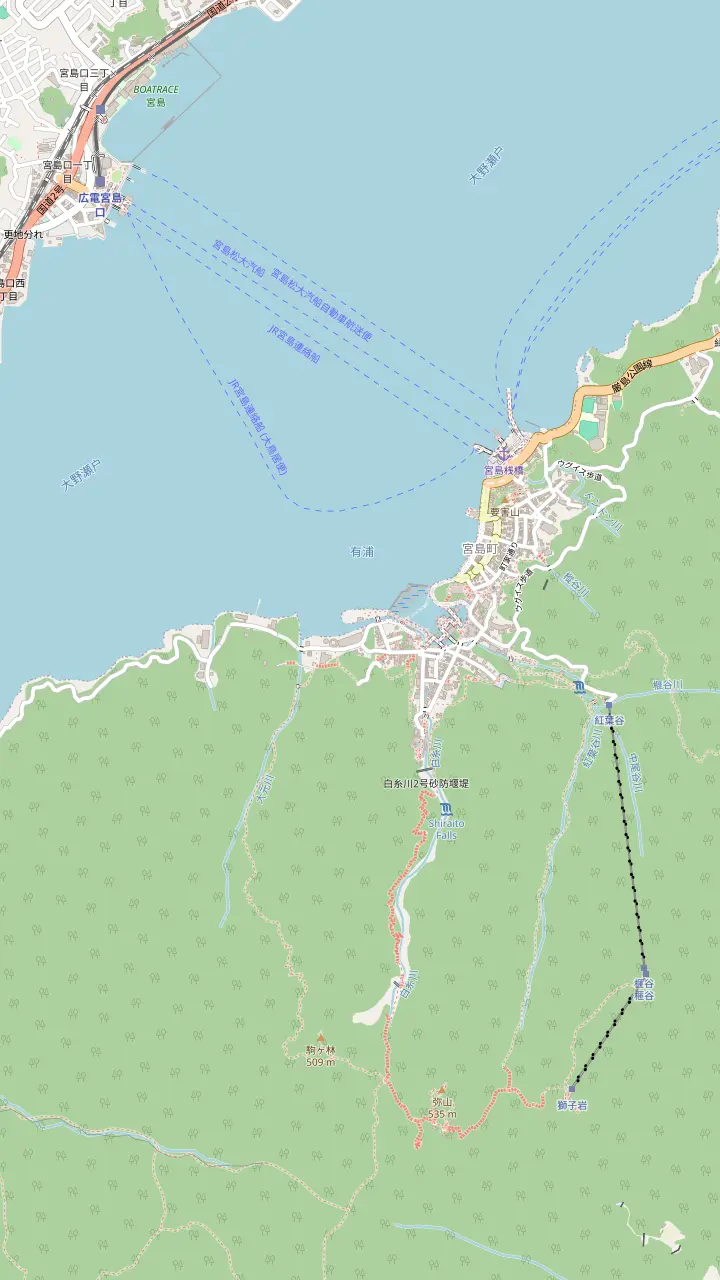
Two ferry companies sail from here to Miyajima.
Google MapsFrom the pier it is about a 10-minute walk to the shrine.
Google MapsThe shrine's O-Torii is built about 200 m offshore.
Google MapsThe oldest temple on Miyajima.
Google MapsA free shuttle bus runs to the station about every 20 minutes.
Google MapsFrom here the summit of Mt. Misen is about 30 minutes on foot.
Google MapsMt. Misen stands 535 m high.
Google Maps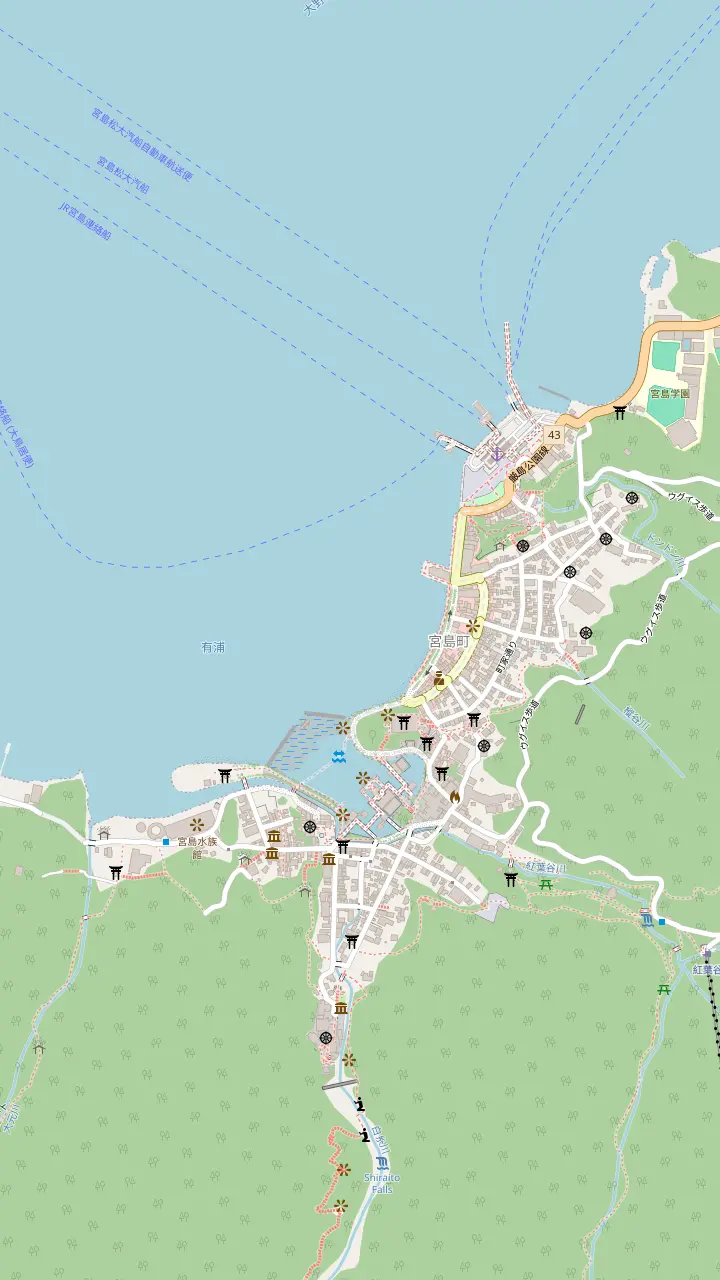
About 2,000 people live on Miyajima, plus free-roaming deer.
Google MapsMomiji manju is the most popular sweet on Miyajima.
Google MapsBuilt in 1407 and restored in 1533.
Google MapsOpen 8:30 a.m. to 4:30 p.m. throughout the year.
Google MapsAdult admission is 300 yen.
Google MapsThe gate stands about 16.8 m high.
Google MapsDedicated to Benzaiten, goddess of music, art and water.
Google MapsThe Kiyomori Festival is held around 20 March.
Google Maps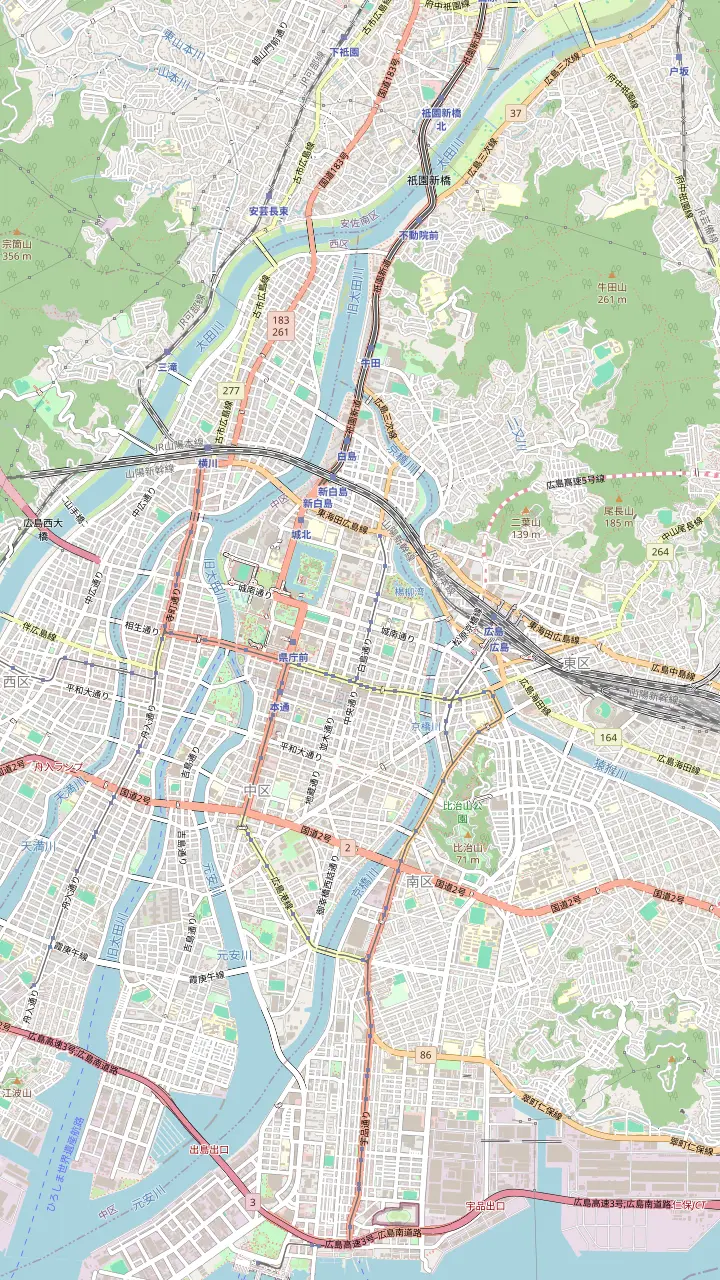
Hiroden streetcar No. 2 or 6 runs from the station to the Dome stop in 17 minutes in total.
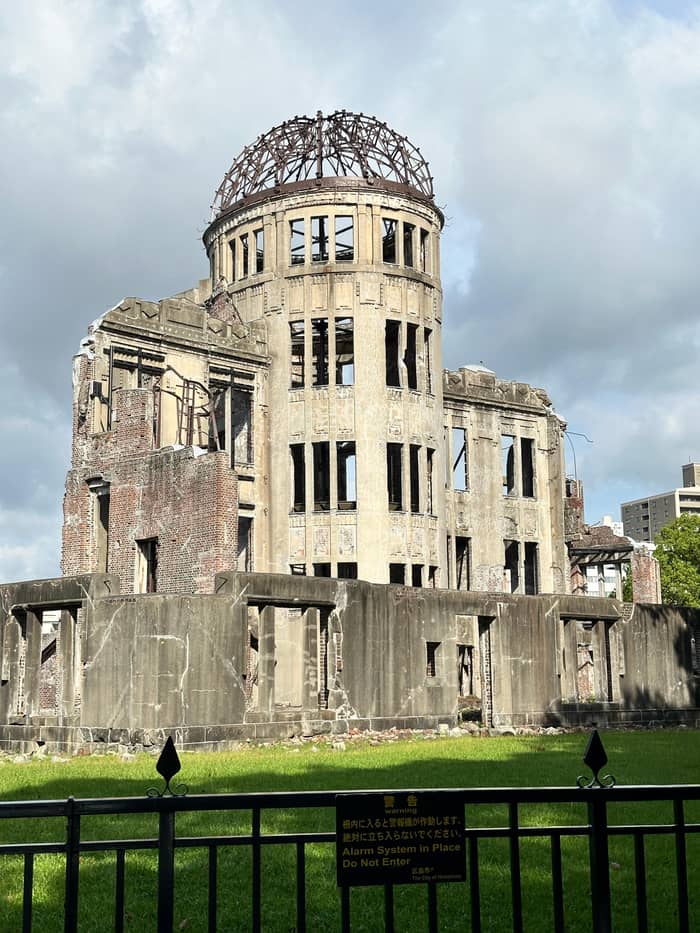
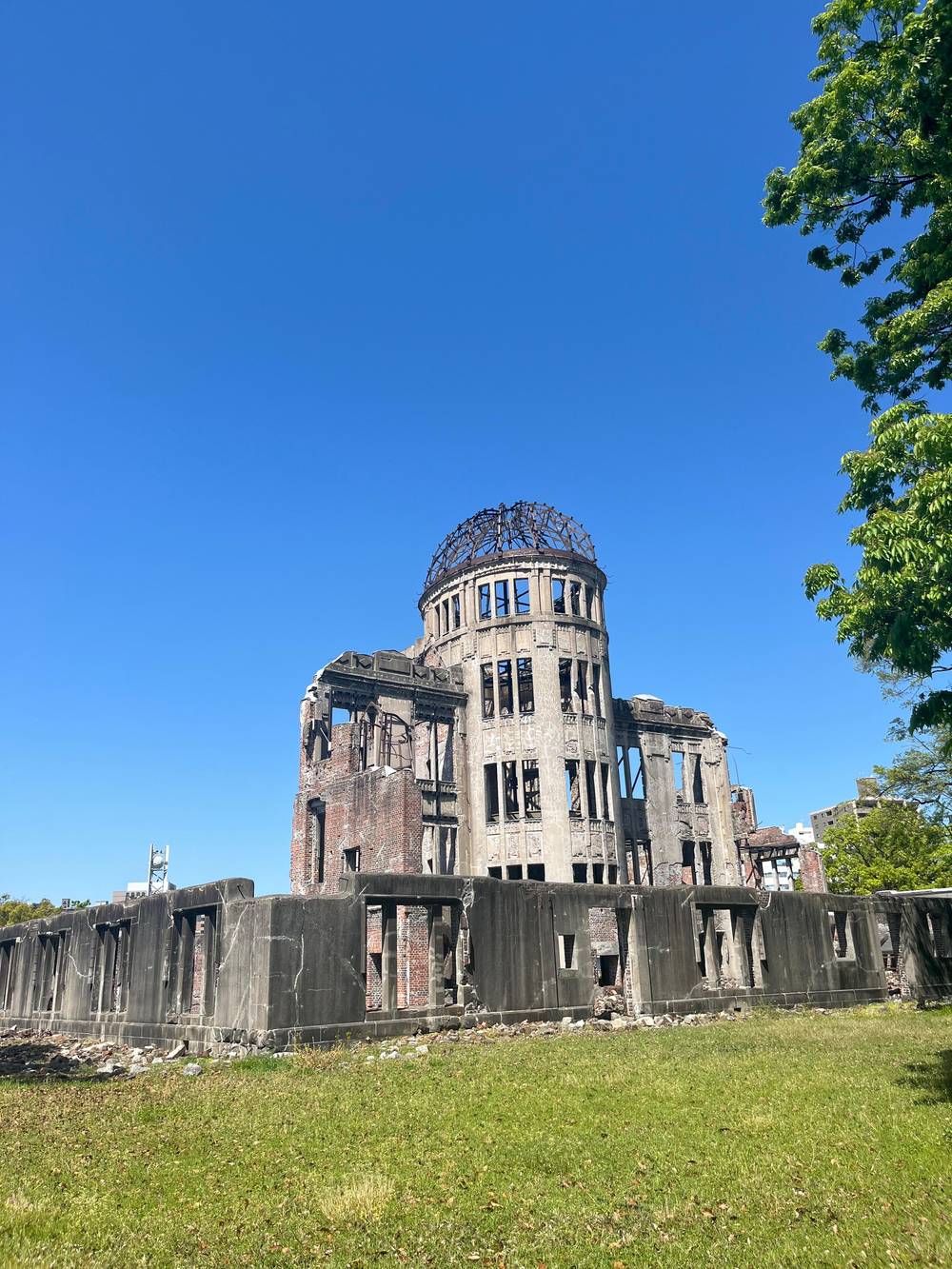
Google MapsDesigned by Jan Letzl and built in 1915 as the Hiroshima Prefectural Industrial Promotion Hall.
Google MapsThe park covers 122,100 square metres.
Google MapsBuilt in 1589 by Mori Terumoto; the Ninomaru has free admission.
Google MapsAdmission is 350 yen for adults.
Google MapsThe museum attracts more than 1.7 million visitors a year.
Google Maps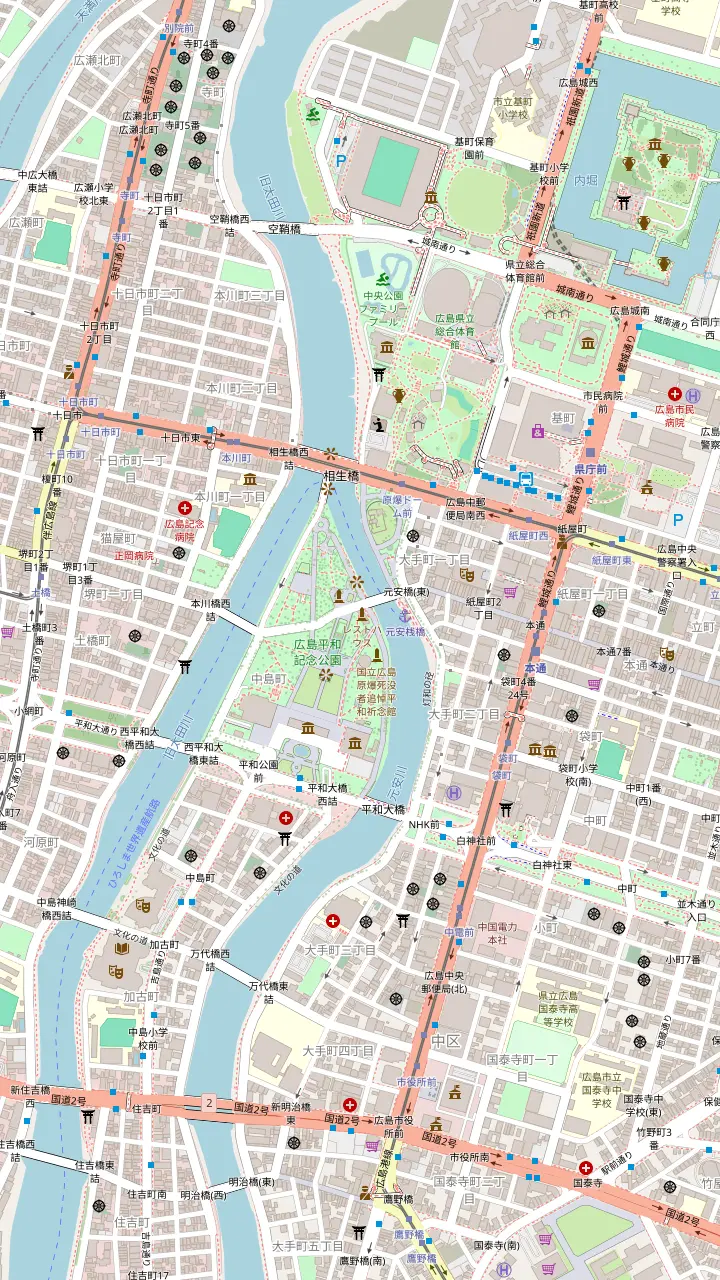
From JR Hiroshima Station it is a 1-minute walk from this streetcar stop.
Google MapsAdded to the UNESCO World Heritage List in December 1996.
Google MapsThe park includes the hypocenter marker at the former Shima Hospital.
Google MapsThe bell is embossed with a map of the world without borders.
Google MapsSadako Sasaki's classmates raised the funds to build it.
Google MapsIt stands 170 m from the hypocenter and reopened in July 2020.
Google MapsThe Hiroshima National Peace Memorial Hall for the Atomic Bomb Victims is part of the park.
Google MapsIt has burned since 1 August 1964.
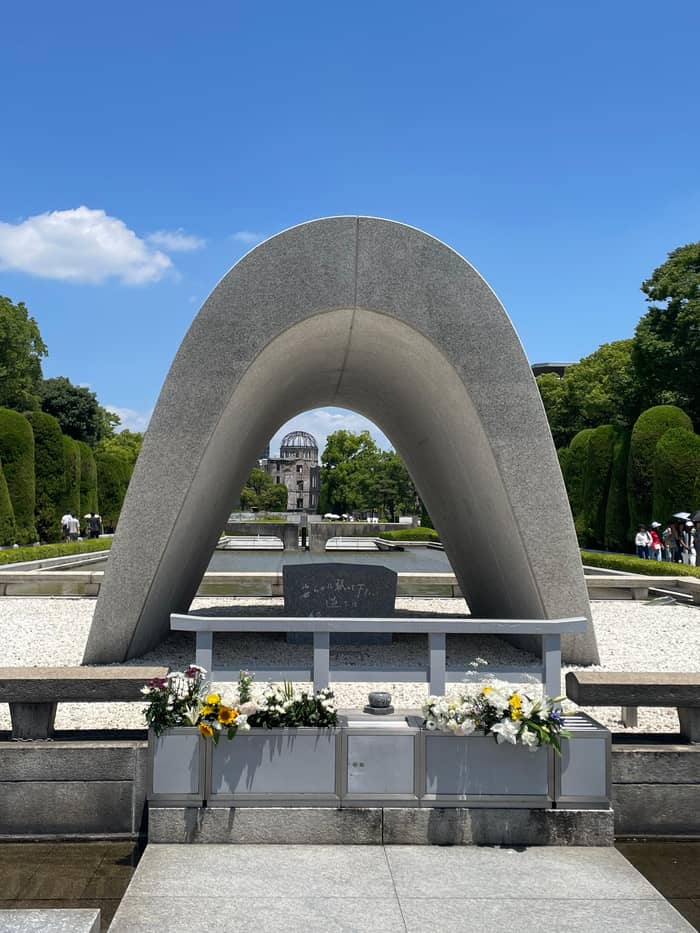
Google MapsThe Cenotaph was built in 1952.
Google MapsThe museum's East and Main Buildings stand at the south edge of the park.
Google MapsOne of the monuments listed on the foundation's guided map of the park.
Google MapsAlso listed among the park's monuments.
Google Maps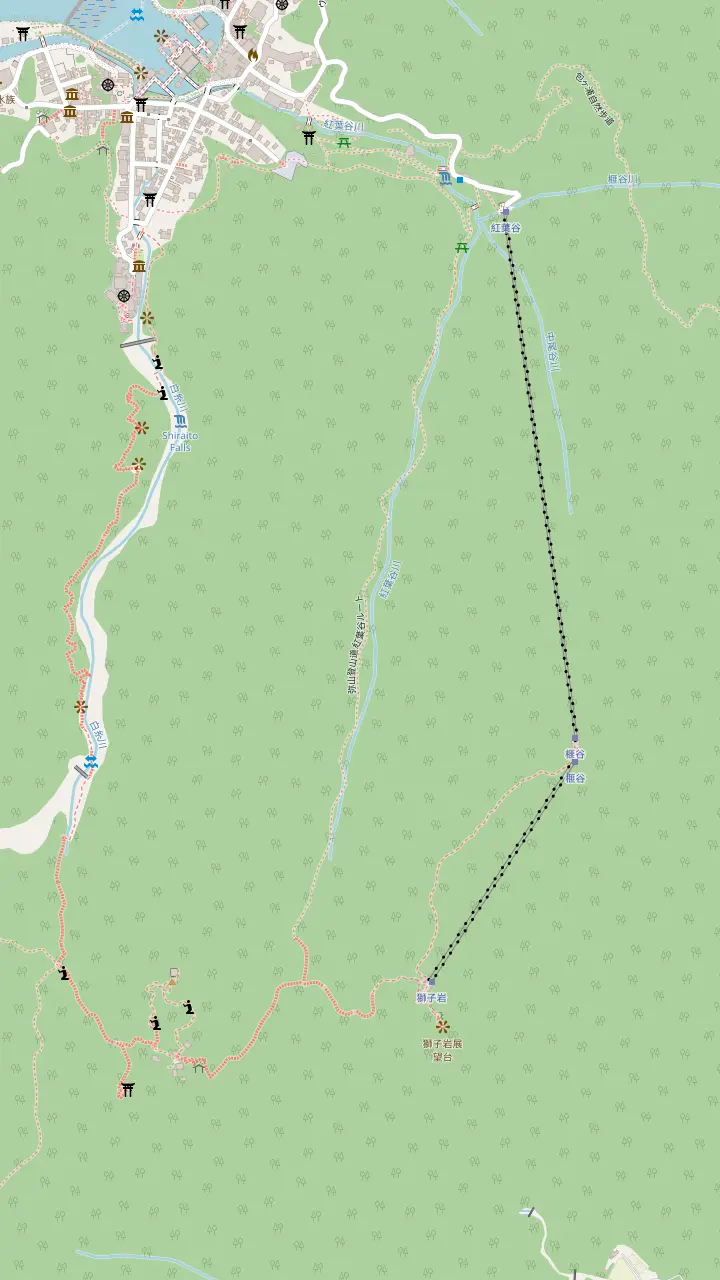
The Daishoin route climbs about 2.6 km to the peak.
Google MapsUp service runs 9.00 am to 4.00 pm.
Google MapsThe Momijidani Line and the Shishiiwa Line meet in series.
Google MapsCashless payment is not accepted at this summit station.
Google MapsThe sacred fire here has burned for over 1,200 years.
Google MapsThe Daisho-in course ends in a 360-degree view of the Seto Inland Sea.
Google MapsMap tiles © OpenStreetMap contributors
Miyajima is a roughly rectangular island in Hiroshima Bay, nine kilometers long. This guide covers the crossing, the shrine and temples, the deer, the food, and the dated festivals that decide when to come.
Editorial team, hiroshimatour.top · Updated November 2, 2026 · Roughly 7 minutes to read
Hiroshima in brief
Miyajima, Japan, sits off the coast of Hiroshima Prefecture, separated from the mainland by the Onoseto strait, which is 500 m wide.7 From JR Hiroshima Station the Sanyo Line reaches Miyajimaguchi in around 30 minutes, and the ferry takes around 10 minutes depending on the weather.1 Two companies run the crossing, the JR ferry and Miyajima Matsudai Kisen.8 The JR line's ferry accepts the Japan Rail Pass and the JR-WEST Rail Pass.9
A 100 yen visitor tax comes with the ferry ticket, on top of the base fare, and it applies whether you buy at a machine or pass the automatic gate.4 From the pier, the walk to Itsukushima Shrine is about 10 minutes.10 There is a second way across: a ferry from the Hiroshima Peace Park takes 45 minutes and skips the train.11 If you want a closer look at the gate from the water, the JR ferry's Great Torii service runs from Miyajima-guchi from 9:10 a.m. to 4:10 p.m.12
Cars are not the plan here. The shrine's own access page says there is no parking at Itsukushima Shrine, and the Hiroden streetcar to Hiroden-miyajima-guchi, an alternative to the JR train, takes about 1 hour from Kamiyacho in the center of the city.13,14 Come on foot from the pier, wear shoes you can walk in all day, and keep your hands free for the stalls and the stairs you will meet before the day is over.
Who is who on the island
| Sight | Its role | Number to remember |
|---|---|---|
| Itsukushima Shrine | Shrine on the water | 37 main buildings, 19 outer |
| Senjokaku | Hall of One Thousand Tatami Mats | Open 8:30 a.m. to 4:30 p.m. |
| Five-storied Pagoda | Red pagoda by the hall | Built 1407, restored 1533 |
| Daiganji | Temple of Benzaiten | Next to the shrine |
| Daishoin | Oldest temple on the island | Autumn maples |
| Mt. Misen | The island's highest peak | 535 m |
From the Miyajima Tourist Association, JNTO and the shrine's own pages.25,32,33,34,35,31
Miyajima has long counted as one of the three most scenic spots of Japan, and it forms part of the Seto Inland Sea National Park.22 The shrine is the reason for the crowds, and JNTO calls it one of the most photographed places in Japan.23 It was established in 593, and Taira no Kiyomori rebuilt it in 1168 in the shinden-zukuri style.24 The main shrine consists of 37 buildings and the outer shrine of 19.25
The shrine is open every day of the year. From March 1 to October 14 the hours are 6:30 a.m. to 6:00 p.m., from October 15 to November 30 they run to 5:30 p.m., and in December they close at 5:00 p.m.26,27 Adult admission is 300 yen, with 200 yen for high school students and 100 yen for elementary and junior high students.5 The corridors have small gaps between the floorboards that relieve the sea's pressure at high tide, so comfortable shoes beat heels.28
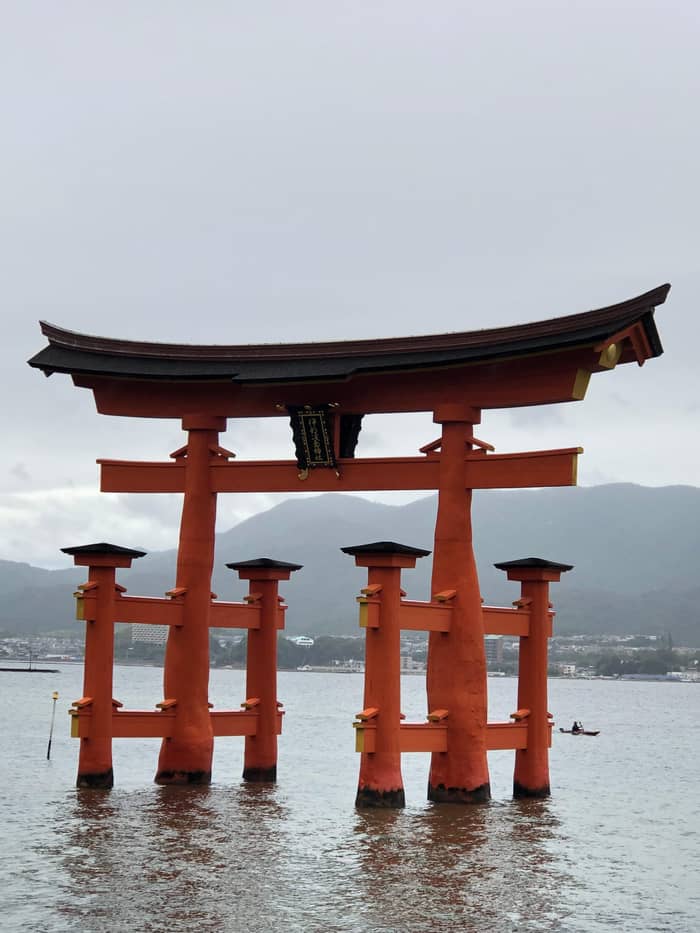
The great gate, the O-Torii, is covered on its own page: how high it is, when you can walk up to it and when it floats. For the island as a whole, what matters is that the gate and shrine change with the tide, so a day here has no fixed picture.29 Hiroshige made woodblock prints of the shrine and the gate at both low and high tide, so the double view is an old subject for artists.30
Up from sea level
Heights as the Miyajima Tourist Association gives them; every hike starts at 0 m above sea level.31
Daishoin is the oldest temple on Miyajima, and its maples turn a deep red in the fall.35 The Miyajima Tourist Association counts it among the most prestigious Shingon temples in western Japan.37 Daiganji, next to the shrine, is dedicated to Benzaiten, goddess of music, art and water.34 Daishoin is a 30-minute walk from the pier.38 Between them the two temples fill the temple half of a visit, and a guide helps you read what you are looking at.
Senjokaku, the Hall of One Thousand Tatami Mats, is the largest structure on Miyajima, and Hideyoshi died in 1598 before it was finished.32,39 It is open 8:30 a.m. to 4:30 p.m. throughout the year and charges a Shoden fee of 100 yen for adults.40,41 Beside it stands the Five-storied Pagoda, built in 1407 and restored in 1533.33 JNTO describes the pagoda as a vivid red that contrasts with the lush greenery and the sea beyond.42
On the hillside the Kiyomori Shrine commemorates Taira no Kiyomori, and the Kiyomori Festival is held around March 20, the anniversary of his death.17 The festival parade runs from 1:00 to 3:30 p.m. on a Sunday in late March.43 Keep the shrine admission and the Senjokaku fee in mind when you count coins, and carry some cash for the stalls on the way back to the pier. On that Sunday participants parade in costume from the pier via Itsukushima Shrine to Kiyomori Shrine.44
Choose your island day
Your time on the island decides what you can do.
If I have two hours before a train
The pier walk
A 2-hour walk lists the torii, the shrine, the pagoda and Daishoin.
If I want temples explained
The longer half day
A 3 to 4-hour tour with an English guide is listed from $76.
If I like autumn leaves
Daishoin in the fall
Daishoin is surrounded by maples that turn red in autumn.35
If I want the festival atmosphere
June 17 by lunar calendar
Kangen-sai is the largest annual festival at the shrine.20
If I would rather climb than shop
Mt. Misen
Mt. Misen stands 535 m high above the shrine.36
Seen with a guide
Longest guided
Shopping street and shrine
Shortest guided
Torii, shrine, pagoda, Daishoin
Calm choice
Hands-on on the island
About 500 deer live on the island, according to the Miyajima Tourist Association; some are domestic, but deer in the forest avoid people.74 JNTO puts the human population at around 2,000, set against that figure for the deer.3 Visitors are not allowed to feed them, for the sake of their health.6 Does deliver between May and July, and in the evening you may see deer heading for the woods, although some have set their dens in the town.75,76
In autumn the deer are louder: from September a buck lives with a doe, and when another buck approaches, the bucks battle with their antlers.77 Keep a respectful distance in those weeks, and keep walking if a buck stands in the path. Raccoon dogs live on the island too, but they appear in the daytime only on rare occasions, so a sighting is a lucky bonus rather than something to plan around.78
The woods behind the town are part of the World Heritage listing: in December 1996 Itsukushima Shrine and 431.2 hectares of the Mount Misen primeval forest were registered together.79 The island holds 136 confirmed kinds of wild birds, and native plants such as Miyajima meadowsweet and Miyajima maple grow here.80,81 For the mountain itself, the ropeway and the hiking routes have their own page, and the mountain deserves a half day.
Your party's total
Set the number of guests and compare the guided options.
4 choices in one view
Set the number of guests and compare the guided options.
≈
View≈
View≈
View≈
ViewEvery row multiplies the lowest per-traveler fare its seller shows by the size of your party, using the European Central Bank's published rate; final totals are fixed only at the seller's checkout.
Dates for the diary
Feb, 2nd weekend
Held in front of the pier; the 2026 edition was canceled.15,16
Around Mar 20
Held on the anniversary of his death.17
Apr 15
Fire walking at Daishoin, court dance at the shrine from about 17:00.18,19
Jun 17 (lunar)
The largest annual festival at Itsukushima Shrine.20
Oct 15
Bugaku court dance from about 17:00.21
Nov 15
The second fire walking ceremony of the year at Daishoin.18
Oysters are the popular local food on Miyajima, and the island's association lists them first among its dishes.82 They are best enjoyed in winter, when they are harvested.83 The annual Oyster Festival is normally held on the second weekend in February in front of the pier, but the 42nd festival planned for February 2026 was canceled because it became difficult to secure enough oysters.15,16 If oysters are your reason to come, check before you plan around a festival.
Anago-meshi is the other specialty, broiled conger eel served on rice, and the sea eel is less fatty than the more common river eel, unagi.84 Okonomiyaki is cooked on the island too; the association notes that there are restaurants serving it.85 Lunch is also part of the day on the Viator bus tour on this site: guests who choose the lunch option eat okonomiyaki on the island for 50 minutes.
For something to carry home, the maple-leaf-shaped momiji manju, filled with red bean paste, is the most popular sweet on Miyajima.86,66 The rice scoop, or shamoji, is a popular souvenir too; a visiting monk created it in the 1800s.87 The shrine builders gave the island a wood-carving tradition, so carved goods are easy to find.88 Buy the cakes fresh and eat them on the street before the afternoon ferry.
Video
The Navigatio Japan, a YouTube channel · Nothing loads from YouTube until you tap the player.
Miyajima only has a population of around 2,000 people, plus some free-roaming deer.
Tick as you pack
Dated events decide when a visit feels different. Kangen-sai, the largest annual festival at Itsukushima Shrine, takes place on the night of June 17 by the lunar calendar.20 Toka-sai performances of bugaku court dance begin about 17:00 on April 15 and October 15.19,21 Daishoin's fire walking ceremony takes place on April 15 and November 15, beginning at 11:00 a.m.18,89 And the Hina Doll Festival shows antique dolls at over 30 locations.90
A guide helps most with the temples. Options on GetYourGuide include a half-day Miyajima tour of 3 to 4 hours from $76, a 2-hour walk from the ferry terminal from $28 and a Zen temple experience from $89. The first is built around the shopping street and Itsukushima Shrine, one hour each, and the second also stops at the five-story pagoda, Daiganji and Daishoin. The Zen temple experience is led by an instructor who speaks English and Japanese rather than being a sightseeing loop.
If you would rather see Hiroshima and the island in a day, the Viator bus tour on this site gives Itsukushima Shrine 50 minutes and Daishoin 30 and is listed from $126. Whichever you choose, set the tide table and the ropeway hours against your plan first. The ropeway runs 9:00 to 16:00 with a final return departure at 16:30, and the gate looks different at every tide, so the order of your stops can matter more than their number.91
FAQ
The Sanyo Line takes around 30 minutes from Hiroshima Station, and the ferry takes around 10 minutes.1
JNTO says the 100 yen visitor tax comes with ferry tickets to the island; the operators list it on top of the base fare.4
JNTO says visitors are not allowed to feed the deer, for the sake of their health.6
The Miyajima Tourist Association says about 500 deer live on the island, and forest deer avoid people.74
It is the largest annual festival at Itsukushima Shrine and falls on June 17 by the lunar calendar.20
Sources
Keep reading
Planning a day around the Peace Park and Miyajima? Ask someone on the team.