Whole day out
Hiroshima and Miyajima day
Guided, from Hiroshima Station
- Length8 hrs start to finish
- GroupUp to 45 guests
- GuideEnglish plus Japanese
- Pricefrom $126
Guides
Language
Currency
See open seatsstarting at $126 · free to cancelPin it on the map
39 places to find
Choose a trail, then press a marker or a place name for a short note and a Google Maps link.
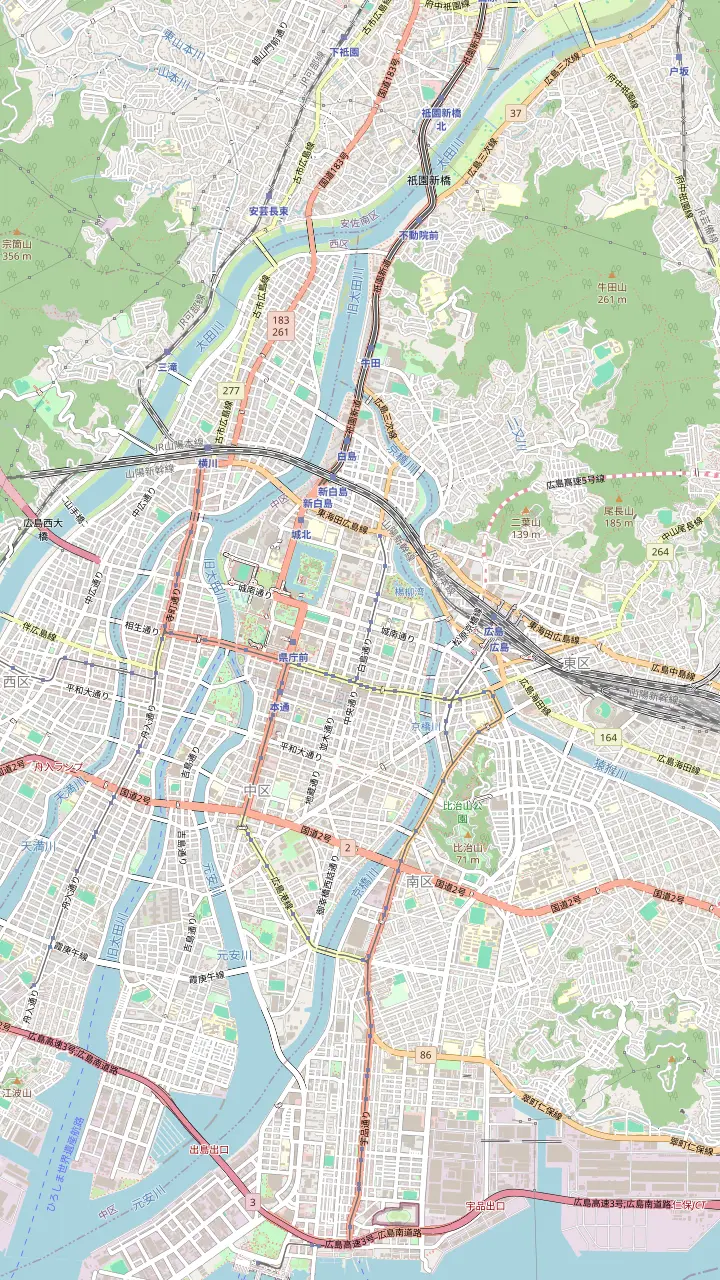
Hiroden streetcar No. 2 or 6 runs from the station to the Dome stop in 17 minutes in total.
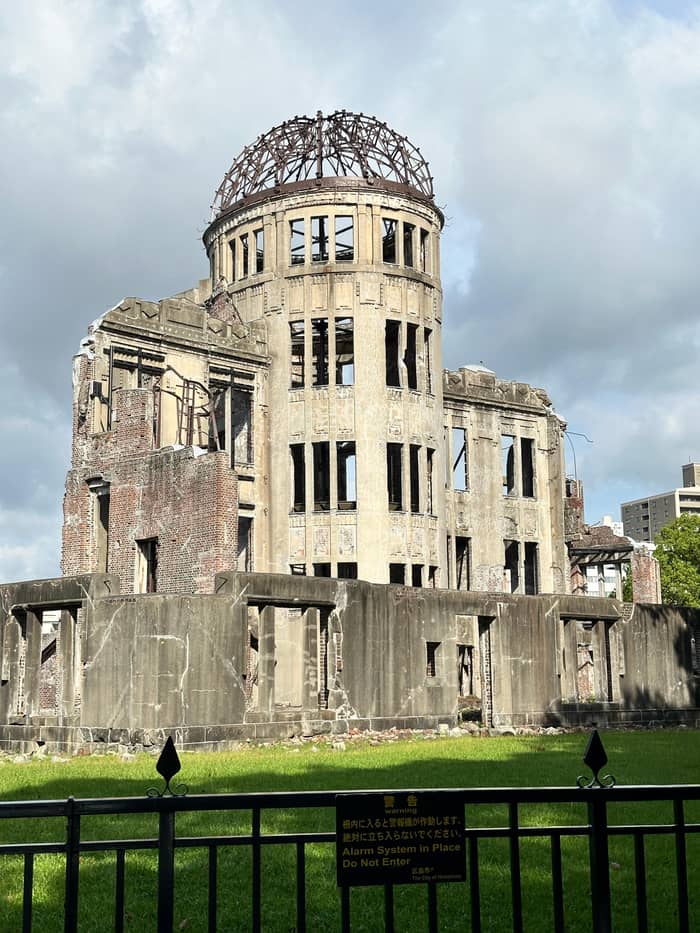
Google MapsDesigned by Jan Letzl and built in 1915 as the Hiroshima Prefectural Industrial Promotion Hall.
Google MapsThe park covers 122,100 square metres.
Google MapsBuilt in 1589 by Mori Terumoto; the Ninomaru has free admission.
Google MapsAdmission is 350 yen for adults.
Google MapsThe museum attracts more than 1.7 million visitors a year.
Google Maps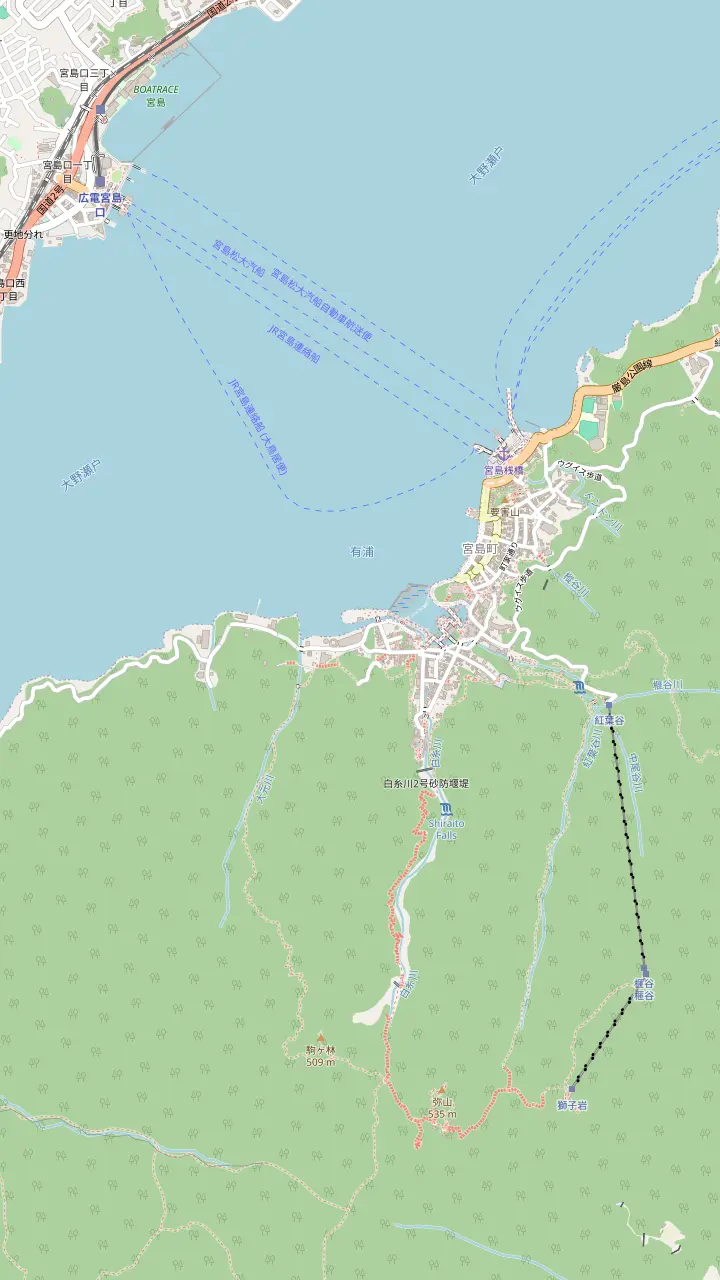
Two ferry companies sail from here to Miyajima.
Google MapsFrom the pier it is about a 10-minute walk to the shrine.
Google MapsThe shrine's O-Torii is built about 200 m offshore.
Google MapsThe oldest temple on Miyajima.
Google MapsA free shuttle bus runs to the station about every 20 minutes.
Google MapsFrom here the summit of Mt. Misen is about 30 minutes on foot.
Google MapsMt. Misen stands 535 m high.
Google Maps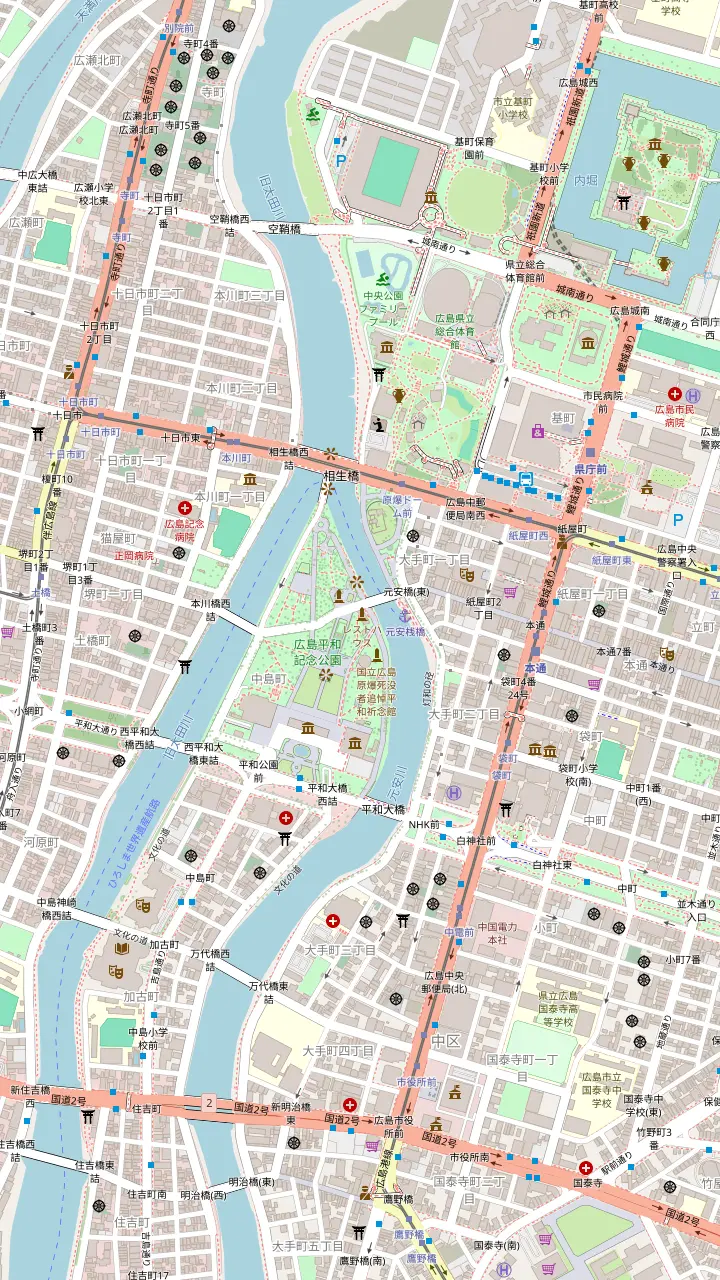
From JR Hiroshima Station it is a 1-minute walk from this streetcar stop.
Google MapsAdded to the UNESCO World Heritage List in December 1996.
Google MapsThe park includes the hypocenter marker at the former Shima Hospital.
Google MapsThe bell is embossed with a map of the world without borders.
Google MapsSadako Sasaki's classmates raised the funds to build it.
Google MapsIt stands 170 m from the hypocenter and reopened in July 2020.
Google MapsThe Hiroshima National Peace Memorial Hall for the Atomic Bomb Victims is part of the park.
Google MapsIt has burned since 1 August 1964.
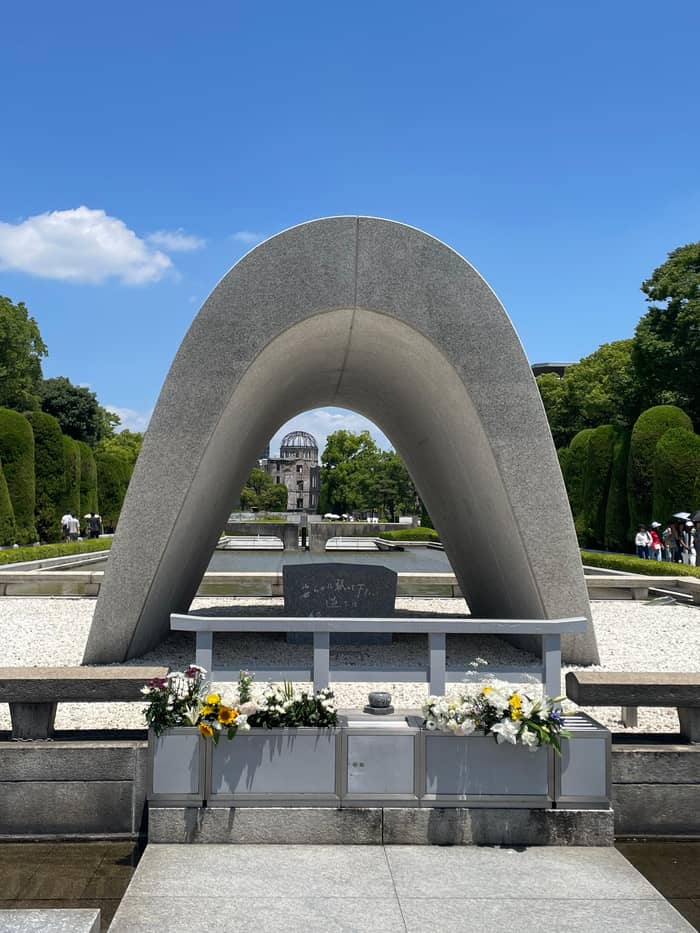
Google MapsThe Cenotaph was built in 1952.
Google MapsThe museum's East and Main Buildings stand at the south edge of the park.
Google MapsOne of the monuments listed on the foundation's guided map of the park.
Google MapsAlso listed among the park's monuments.
Google Maps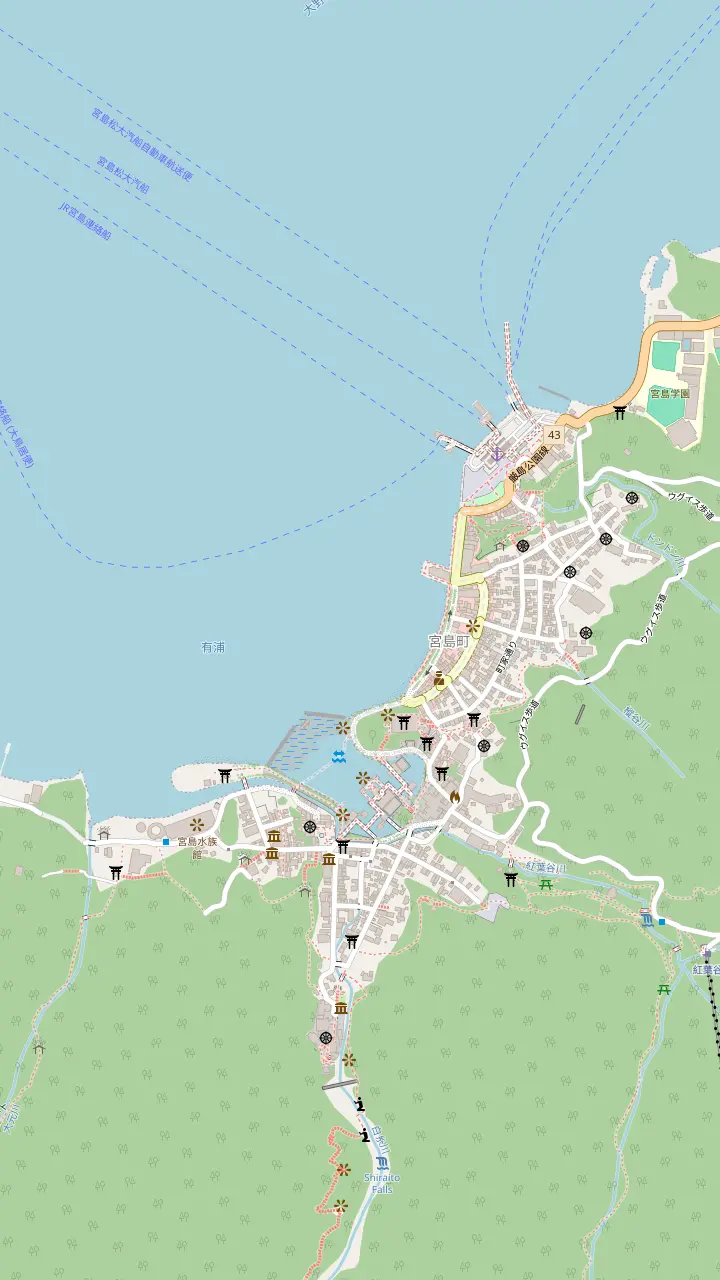
About 2,000 people live on Miyajima, plus free-roaming deer.
Google MapsMomiji manju is the most popular sweet on Miyajima.
Google MapsBuilt in 1407 and restored in 1533.
Google MapsOpen 8:30 a.m. to 4:30 p.m. throughout the year.
Google MapsAdult admission is 300 yen.
Google MapsThe gate stands about 16.8 m high.
Google MapsDedicated to Benzaiten, goddess of music, art and water.
Google MapsThe Kiyomori Festival is held around 20 March.
Google Maps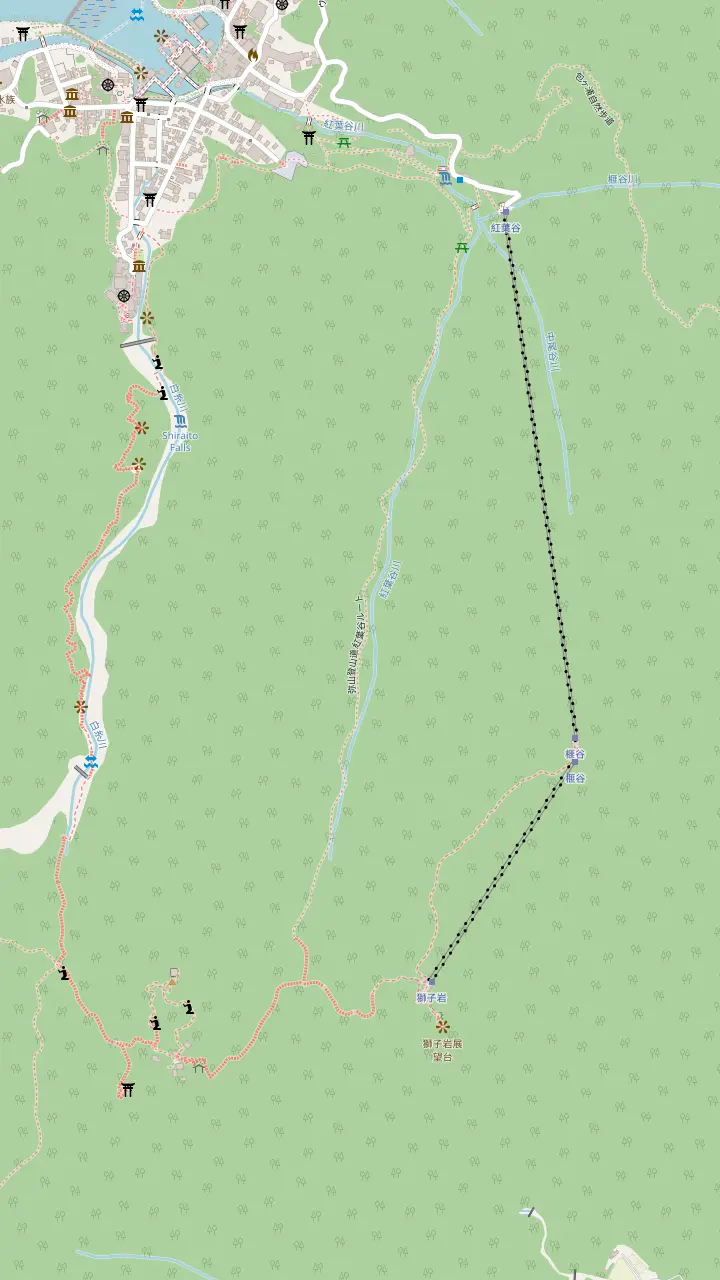
The Daishoin route climbs about 2.6 km to the peak.
Google MapsUp service runs 9.00 am to 4.00 pm.
Google MapsThe Momijidani Line and the Shishiiwa Line meet in series.
Google MapsCashless payment is not accepted at this summit station.
Google MapsThe sacred fire here has burned for over 1,200 years.
Google MapsThe Daisho-in course ends in a 360-degree view of the Seto Inland Sea.
Google MapsMap tiles © OpenStreetMap contributors
The things to do in Hiroshima fall into four groups: the peace sites, the castle district, the food, and the island across the bay. Here is how they fit together, what each costs, and when a bus day makes sense.
Editorial team, hiroshimatour.top · Updated November 2, 2026 · Roughly 7 minutes to read
Hiroshima in brief
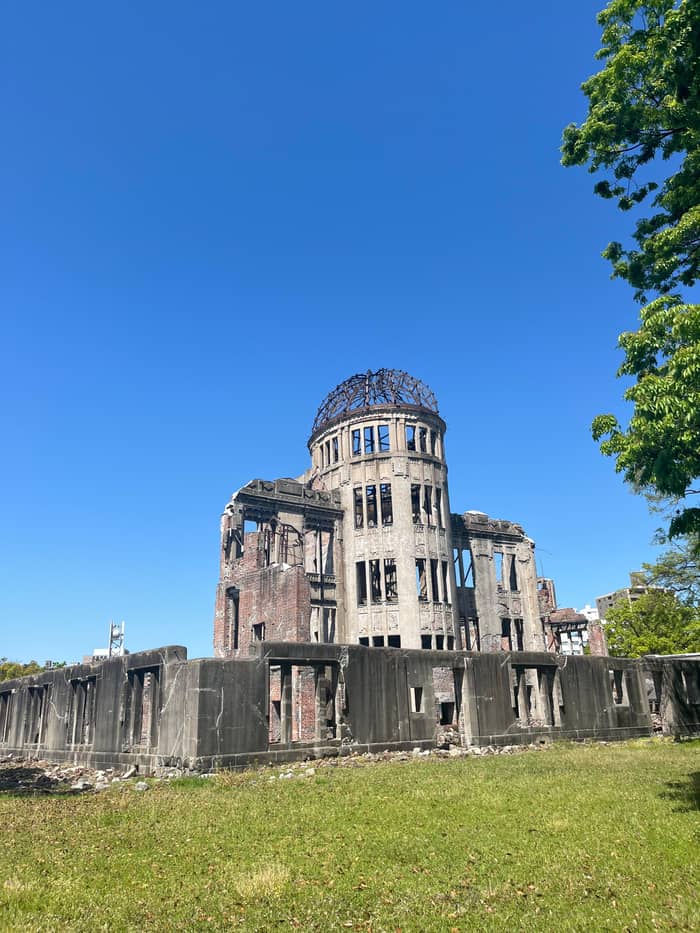
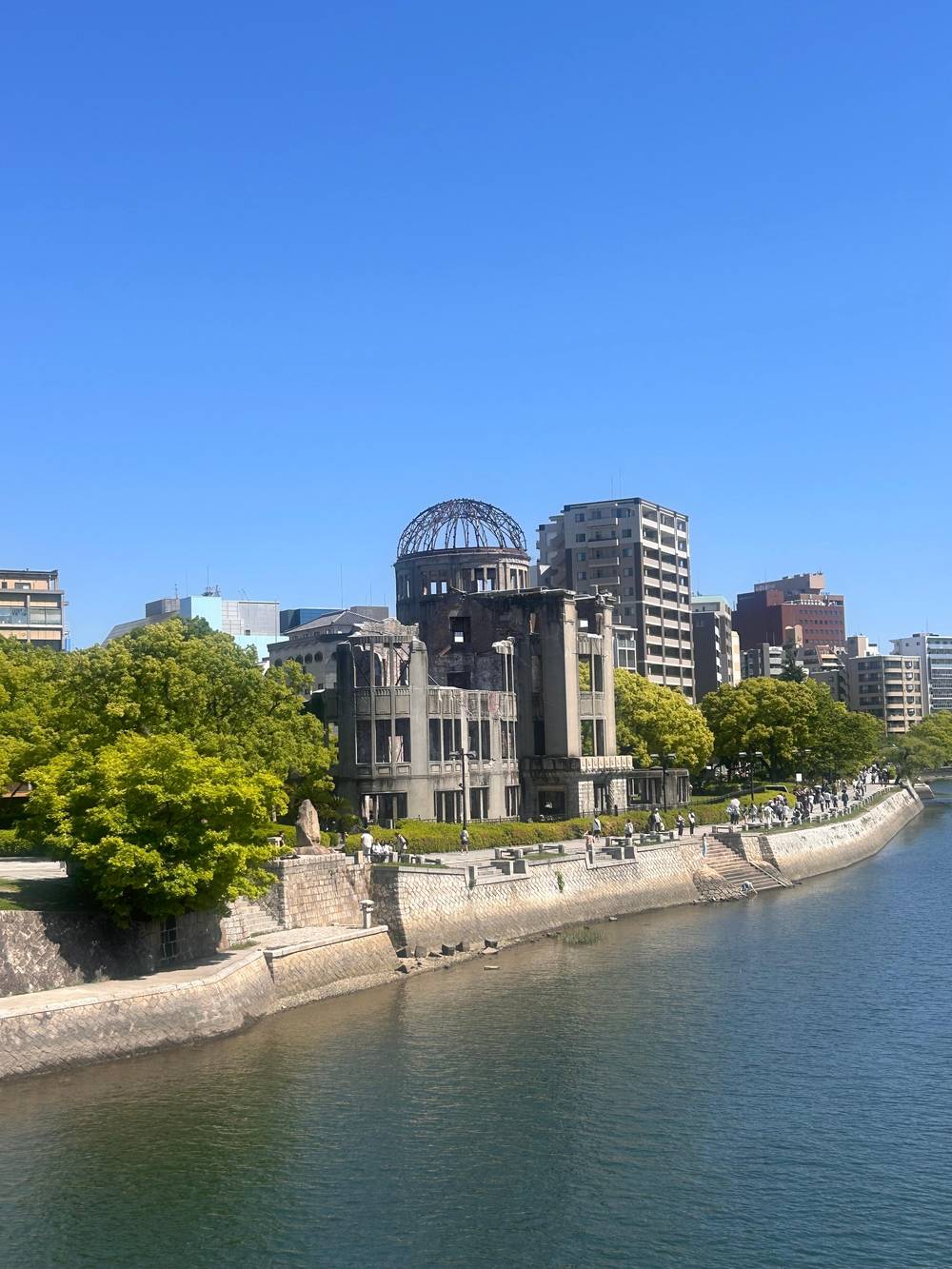
Hiroshima's best-known stop is also its easiest to reach. From JR Hiroshima Station, Hiroden streetcar No. 2 or 6 stops at Genbaku Dome-mae, a 1-minute walk from the Atomic Bomb Dome, and the whole trip takes 17 minutes.1 The Dome began as the Hiroshima Prefectural Industrial Promotion Hall, designed by Jan Letzl and finished in 1915, and it joined the UNESCO World Heritage List in December 1996.6,7 It is the first thing you see on arriving at the park, across the Motoyasu River.8
The park behind it is a district given over to memory rather than a collection of attractions. Before the bombing this was Nakajima, a commercial center in the Edo era and the political, administrative and commercial heart of the city in the Meiji era.9 A law passed on August 6, 1949 devoted the whole district to peace memorial facilities, and the park, which covers 122,100 square meters, was designed by Kenzo Tange and three others in a competition that drew 145 proposals.10,11 The bus tour on this site gives the Dome 15 minutes and the park 35; walkers can stay as long as they like.
Look for the order in it. The view from the museum's pillars through the Cenotaph to the Dome is called the North-South Line, and the city's stated aim is that no buildings or structures are visible behind the Dome.12,13 Walk that line slowly once, then wander: the Flame of Peace, lit on August 1, 1964, the Peace Bell with its map of a world without borders, and the Children's Peace Monument, built by the classmates of Sadako Sasaki, are all in the park.14,15,16
Doing it unguided
| Place | Cost in yen | Hours |
|---|---|---|
| Itsukushima Shrine | 300 yen adult | 6:30 a.m. to 6:00 p.m., Mar 1 to Oct 14 |
| Shukkeien garden | 350 yen adult | 9:00 to 18:00, Mar 16 to Sep 15 |
| Hiroshima Castle, Ninomaru | Free | 9:00 AM to 5:30 PM, Apr to Sep |
| Miyajima Ropeway | 2,000 yen round trip | Up 9.00 am to 4.00 pm |
| Ferry to Miyajima | 100 yen visitor tax with the ticket | Great Torii ferries 9:10 a.m. to 4:10 p.m. |
Fees and hours as the official sources state them, adult rates in yen.28,3,2,29,30,31
The Peace Memorial Museum stands at the south end of the park, in a line of three buildings with the International Conference Center Hiroshima, and it draws more than 1.7 million visitors a year.17,18 A museum with that many visitors rewards planning. The bus tour here schedules 60 minutes inside, which is a short visit for what the museum holds. If the museum is the reason you came, give it a morning of its own and treat the rest of the park as the walk before and after.
Two quieter buildings sit in the park. The Hiroshima National Peace Memorial Hall for the Atomic Bomb Victims is part of it, and the Rest House, 170 m from the hypocenter, reopened in July 2020 with a tourist information center on its first floor.19,20 The hypocenter itself is marked at the former Shima Hospital, and the park also keeps phoenix trees that were exposed to the bomb.21,22 None of these needs a ticket plan; they are places to slow down between the larger stops.
Plan differently if you land in the first week of August. The Peace Memorial Ceremony takes place on August 6 in front of the Cenotaph, scheduled to end about 8:50 am, and at 8:15 the Peace Bell rings and the city observes a minute of silence.23,24 Anyone of any nationality can take part in the daytime ceremony, and in the evening paper lanterns are floated down the Motoyasu River.25,26 There is no parking for the ceremony, so use the streetcar.27
Stop lengths in minutes
Stop lengths as listed by the Viator tour; the lunch stop applies to guests who choose the lunch option.
Hiroshima Castle is about 15 minutes by tram from the station.33 Mori Terumoto built it in 1589, and the atomic bomb destroyed every building; the Hirayagura, Tamonyagura and Taikoyagura were completed in 1994, restoring the look of the Ninomaru, the second enclosure.34,35,36 Expect the outside of the keep only: it closed in March 2026, though its exterior can still be viewed.37 The moat and the stone walls are the older part of the picture.
The Ninomaru is free to enter. It opens 9:00 AM to 5:30 PM from April to September and 9:00 AM to 4:30 PM from October to March.2,38 In a day that otherwise charges at nearly every stop, the castle grounds are the one place where you can walk in without buying anything, which makes them a good buffer between the museum and a late lunch. Last entry is 30 minutes before closing time.39
Shukkeien, a 10-minute walk from Hiroshima Station, is the garden to pair with the castle.40 Ueda Soko, a tea master and chief retainer of the Asano clan, built it in 1620 around a central pond dotted with islands of various sizes.41,42 Adults pay 350 yen.3 The garden is open 9:00 to 18:00 from March 16 to September 15 and 9:00 to 17:00 from September 16 to March 15, with last admission 30 minutes before closing.3,43
Find your speed
Match what you want from the day to a way of doing it.
If I have one day and want both sites
The bus day
The 8-hour tour covers the Dome, park, museum, shrine and Daishoin.
If I only want the peace sites
A park walk
A 2-hour guided park walk is listed from $20.
If I like gardens more than museums
Castle and Shukkeien
The Ninomaru is free and Shukkeien costs 350 yen for adults.2,3
If I want to see the torii at low tide
Skip the tour
The tide decides when you can walk up to the gate.32
If I travel on August 6
Sleep close to the park
The ceremony is held in front of the Cenotaph and is scheduled to end about 8:50 am.23
Three Hiroshima days compared
Whole day out
Guided, from Hiroshima Station
The city only
Gokoku Shrine to the museum
The island only
From Miyajimaguchi Station
Hiroshima's signature meal is a griddle pancake, and its people have strong opinions about it. The Miyajima Tourist Association writes that okonomiyaki as Hiroshima knows it started after the Pacific War, when wheat from the United States became affordable for the home.68 As Japan grew richer, soba and udon went into it and the famous okonomi sauce was developed.69 Eat it at least once on the mainland before you cross the water.
The dish is a family habit as much as a restaurant order. Every family has an okonomi day once a week, usually a weekend dinner.4 You do not have to wait for the island to try it, either: the Miyajima association notes that there are okonomiyaki restaurants on Miyajima too.70 Order it the way locals talk about it, with a choice of soba or udon noodles, and expect a homey counter rather than a formal dining room.
The bus tour on this site builds its lunch around the dish. Guests who choose the lunch option eat okonomiyaki on the island for 50 minutes, and a vegetarian version is available on request. There is no vegan, halal or gluten-free lunch, so guests with those needs book without lunch and eat on their own. On Miyajima the other local specialty is oysters, best in winter when they are harvested.71
Hiroshima group price
Set the number of guests and compare the guided options.
4 choices in one view
Set the number of guests and compare the guided options.
≈
View≈
View≈
View≈
ViewEvery row multiplies the lowest per-traveler fare its seller shows by the size of your party, using the European Central Bank's published rate; final totals are fixed only at the seller's checkout.
How the bus day runs
10:00
Staff hold a green and white flag at the Shinkansen ticket gate on the 2nd floor, North Gate.
A 15-minute stop
The first stop, before the park.
A 35-minute stop
Time for the monuments in the park.
A 60-minute stop
The longest stop of the morning.
A 20-minute leg
The ferry crossing the tour includes.
A 50-minute stop
Followed by Daishoin for 30 minutes.
Miyajima is the natural second half of a Hiroshima day. From JR Hiroshima Station the Sanyo Line reaches Miyajimaguchi in around 30 minutes, and the ferry takes around 10 minutes more.5 A 100 yen visitor tax comes with the ferry ticket.30 From the pier it is about a 10-minute walk to Itsukushima Shrine.49 A ferry also runs from the Hiroshima Peace Park to the island and takes 45 minutes.72
At Itsukushima Shrine adult admission is 300 yen, and the grounds are open year-round, 6:30 a.m. to 6:00 p.m. from March 1 to October 14.28,73 The O-Torii stands about 16.8 m high, and what you see depends on the tide: at high tide the shrine and gate appear to float, and at low tide you can walk up to the gate.59,32 Check the tide before you choose the hour; the shrine's own guest hours do not change with it.
Beyond the shrine, Daishoin is the island's oldest temple, and Senjokaku is the largest structure on it.51,74 About 2,000 people live on Miyajima, along with free-roaming deer, which visitors are not allowed to feed.55,75 The ropeway climbs toward Mt. Misen, which stands 535 m high, and an adult round trip costs 2,000 yen.54,29 Plan the hour of the shrine visit around the tide, and the hour of the ropeway around the weather.
Video
Abroad in Japan on YouTube · Nothing loads from YouTube until you tap the player.
The view from the pillars of the Peace Memorial Museum through the Cenotaph for the A-bomb Victims to the Atomic Bomb Dome is called the North-South Line.
Tick as you plan
The sights above fit into one long day, and the Viator bus tour on this site strings them together. It is an 8-hour guided tour from Hiroshima Station led by a live guide in English and Japanese, for a group of up to 45, listed from $126. Its stops are the Atomic Bomb Dome (15 minutes), the park (35), the museum (60), the ferry, lunch, Itsukushima Shrine (50) and Daishoin (30). The listing has 9,491 reviews rated 4.97.
Doing it yourself means buying each ticket and reading each timetable. The streetcar to the Dome takes 17 minutes, Shukkeien is 350 yen, Itsukushima Shrine is 300 yen, and the ferry ticket carries a 100 yen visitor tax.1,3,28,30 What the bus tour saves is the planning: the order, the transfers and the ferry are decided for you, and what it costs you is the freedom to stay longer at the stop that moves you.
A guided walk covers the park alone. GetYourGuide lists a 2.5-hour walk from Gokoku Shrine to the museum from $35 with 1,276 reviews, and a 2-hour guided walk of the park from $20. For the island on its own there is a half-day tour of 3 to 4 hours from $76. Pick whichever matches the part of the day you most want explained, and keep the rest for wandering.
FAQ
A bus tour from Hiroshima Station runs 8 hours and visits the Atomic Bomb Dome, the park, the museum, Itsukushima Shrine and Daishoin.
Get off at Genbaku Dome-mae and walk 1 minute; the total travel time is 17 minutes.1
University students pay 150 yen, and school students enter free, under the fees revised on April 14, 2025.3
The Sanyo Line takes around 30 minutes to Miyajimaguchi and the ferry around 10 minutes more.5
JNTO says a 45-minute ferry runs from the Hiroshima Peace Park to Miyajima.72
Sources
Keep reading
Planning a day around the Peace Park and Miyajima? Ask someone on the team.